Identifying sea buckthorn – and not mistaking firethorn
Orange berries tight on the twig: how to recognise sea buckthorn, how to tell it from firethorn with its mildly poisonous seeds, and the foraging rules.
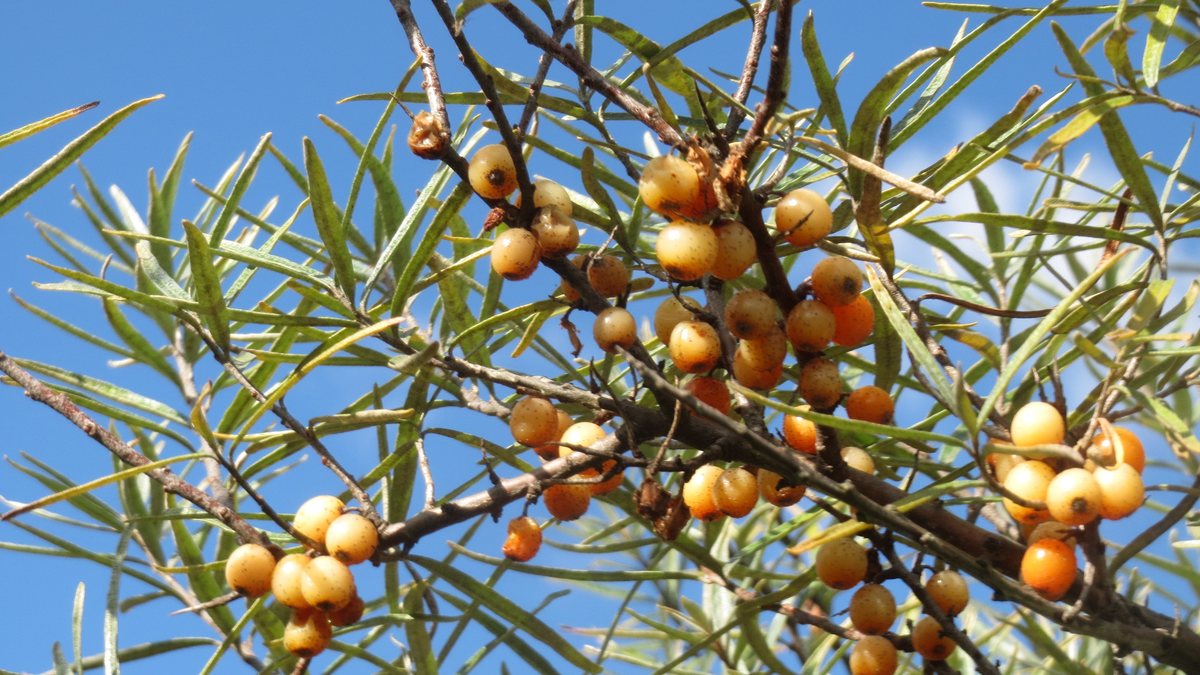
Orange berries packed along thorny twigs: in late autumn sea buckthorn stands out because its fruit is still hanging long after the leaves have stopped being green. An ornamental shrub with similar orange fruit stands in many green spaces: firethorn.
Why sea buckthorn stands out now
Sea buckthorn (Hippophae rhamnoides, German: Sanddorn) bears fruit from early August to early December. It is very frost hardy, and the berries often stay on the shrub for a long time. Its nickname is the "lemon of the north"; it is known for the high vitamin C content of its fruit, which is made into foods, drinks and skin-care products.
It is dioecious: male and female flowers grow on different shrubs. Only the female shrubs bear berries. If you find a sea buckthorn without fruit, it may be a male shrub.
In Germany it grows wild only in scattered places, for example in southern and central Bavaria, south-east and west Baden-Württemberg and north-west Lower Saxony; old stands also exist on the coasts of Mecklenburg-Vorpommern and Schleswig-Holstein. It also turns up on sandy soils, in gravel pits and on road embankments, and it is planted as a hedge and ornamental shrub in nature-style gardens and parks.
Recognising sea buckthorn
On sea buckthorn these features go together:
- Growth: a shrub with thorns (the species name rhamnoides goes back to the word for "thorn"), with deep roots and many root suckers.
- Leaves: alternate, very narrow (40 to 80 millimetres long, only 3 to 8 millimetres wide), the edge rolls slightly downward. The upper side looks grey-green, the underside is densely covered with scale hairs and white-felted.
- Fruit: 7 to 9 millimetres, round to egg-shaped, glossy orange-red to orange-yellow, with a single seed. The skin is speckled by flat scale hairs. They sit in large numbers tight along the twigs of the female shrubs.
- Flowers: inconspicuous, yellowish, from March to May – before the leaves emerge.
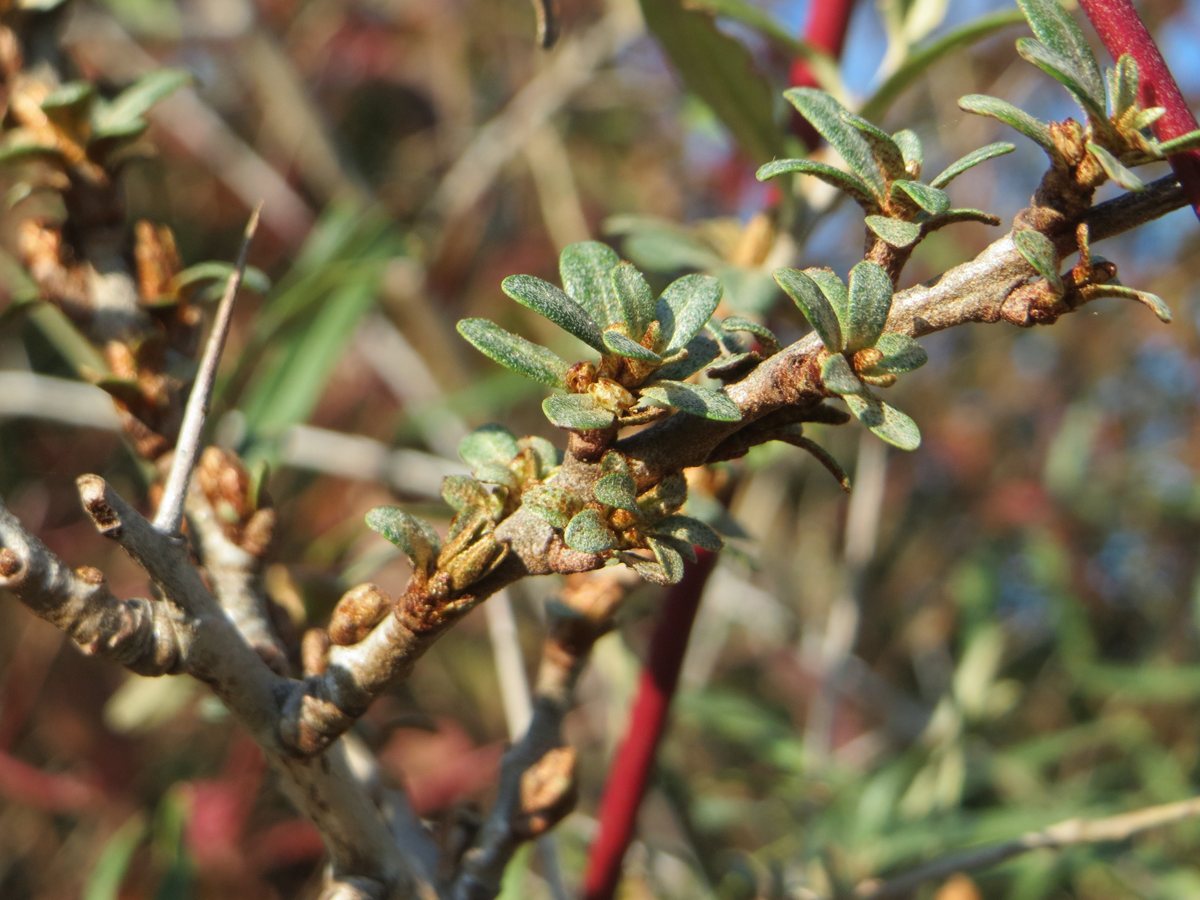
Sea buckthorn in autumn: thorn on the twig, narrow grey-green leaves. Photo: AnRo0002, CC0.

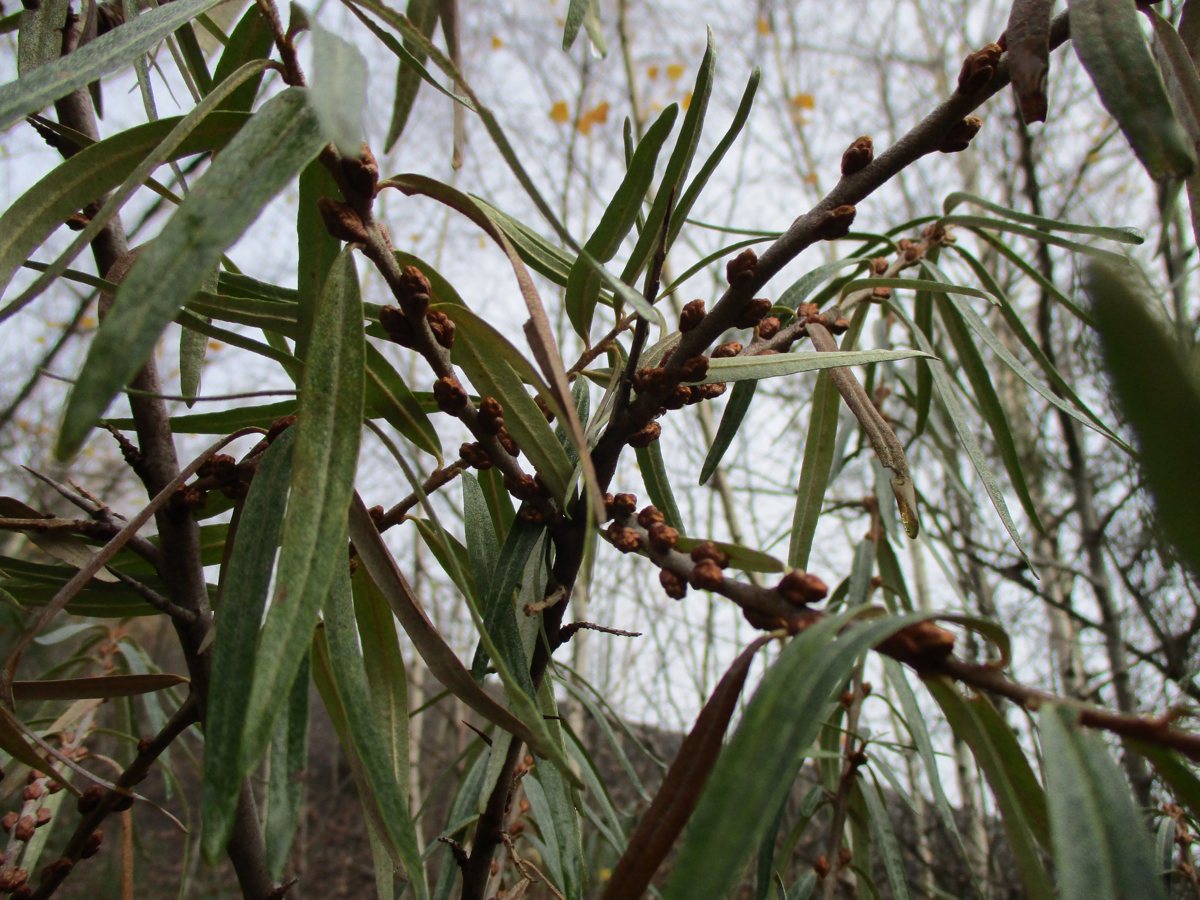
Sea buckthorn at the end of November: very narrow leaves, twigs with small buds. Photo: AnRo0002, CC0.

Watch out for the look-alike: firethorn
Firethorn (Pyracantha, German: Feuerdorn) is an evergreen, heavily thorned shrub, 4 to 6 metres tall, often planted as an ornamental and hedge in gardens and green spaces. Its orange, red or yellow berries stay on the shrub for a long time. It is not native to central Europe.
According to the specialist literature most parts of firethorn, including the pulp, are not poisonous; the seeds are mildly poisonous. They contain small amounts of cyanogenic glycosides, and eating the fruit can cause stomach and bowel complaints. Poisonings are usually mild and occur mostly in small children.
How to tell it apart:
- Leaves: firethorn is evergreen with broader, glossy leaves, the edge entire to serrated or notched. Sea buckthorn has narrow, grey-green leaves with a white-felted underside.
- Fruit: firethorn berries are round and orange-red and carry a dark remnant of the flower at the top. They sit in clusters on stalks.
- Spring flowers: firethorn has white, five-petalled flowers in umbels. Sea buckthorn flowers inconspicuously yellowish before the leaves appear.
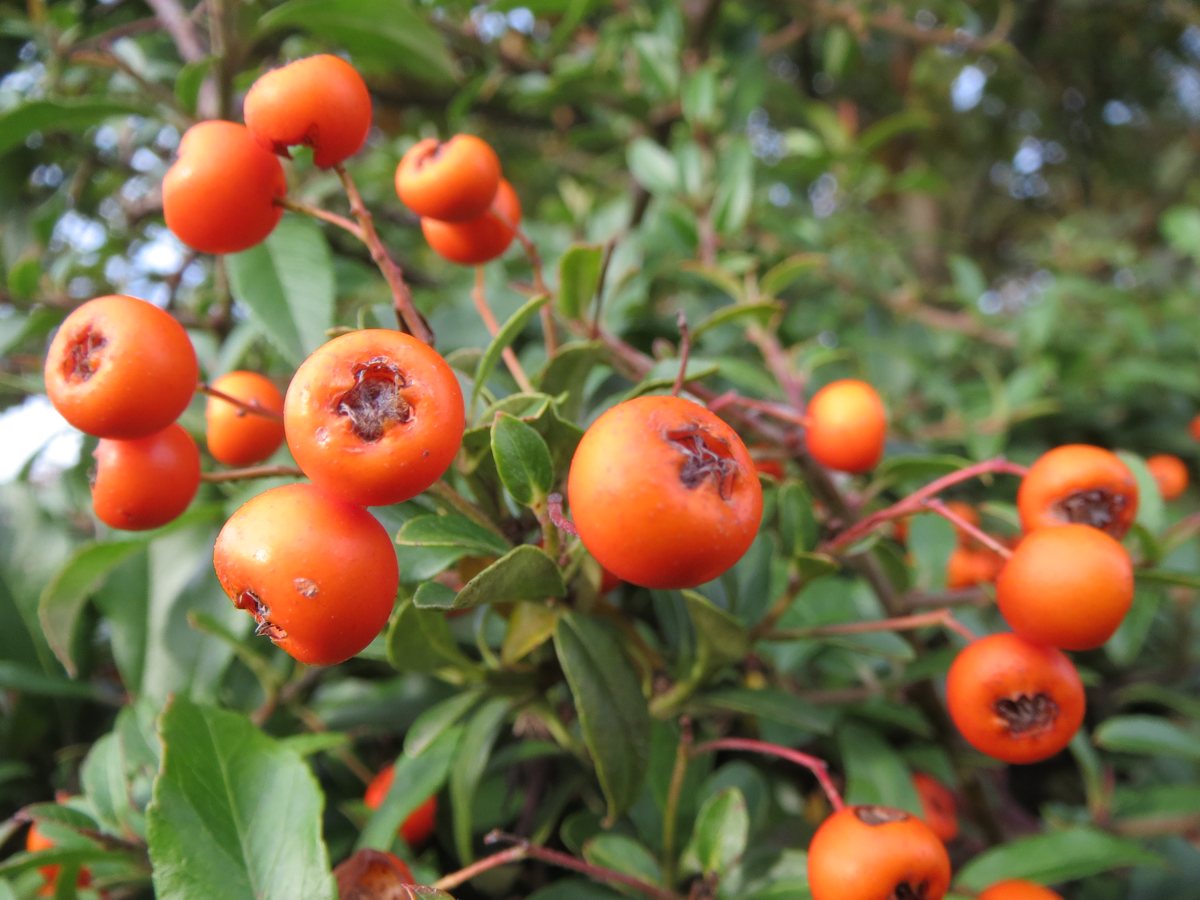
Firethorn in October: round orange-red berries with a dark flower remnant on top. Mildly poisonous seeds. Photo: AnRo0002, CC0.

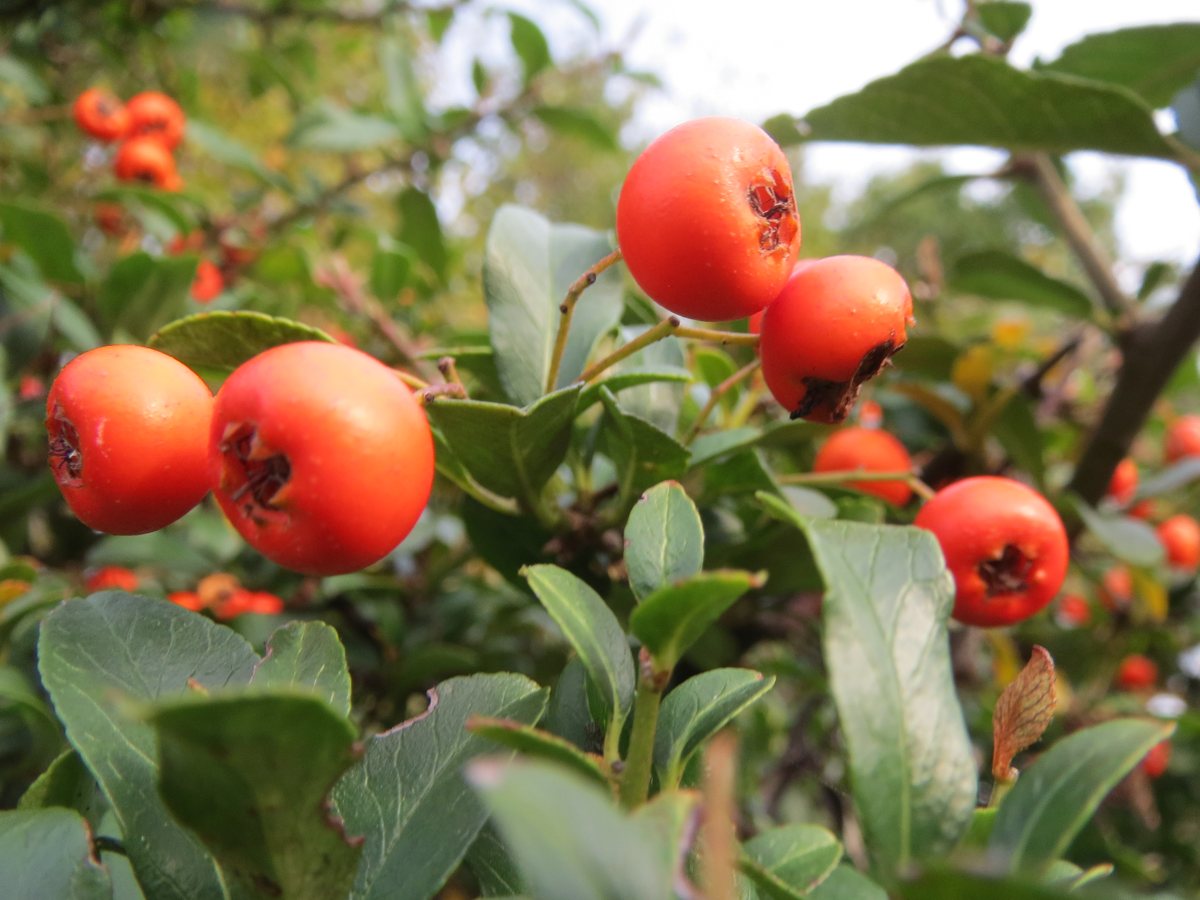
Firethorn: broad, glossy green leaves, not the narrow grey-green ones of sea buckthorn. Photo: AnRo0002, CC0.

The one rule
Sea buckthorn has narrow, grey-green leaves with a white-felted underside and berries tight on the twig. If the shrub has broad, glossy, evergreen leaves and round berries in clusters with a dark flower remnant, it is firethorn: do not pick. If everything does not match sea buckthorn, leave the berries hanging.
There are more orange and red autumn fruits on thorny shrubs. For red barberry see Are barberries poisonous?, and for the look-alikes of hawthorn, including poisonous yew, see Hawthorn berries.
What people do with sea buckthorn
The pulp is thin and mushy and contains essential oils. Sea buckthorn is traditionally made into juice, purée and jam; the berries taste sour. Practical points when gathering:
- Wear gloves: the thorns are sharp.
- Only take berries you have looked at one by one. Tearing off whole twigs harms the shrub.
- Choose clean spots: not right at the roadside and not where spraying takes place.
Where you may gather sea buckthorn
- Planted shrubs in gardens, housing estates and parks belong to someone. Ask first.
- Wild sea buckthorn: the German Federal Nature Conservation Act allows, in § 39 paragraph 3, gathering wild-growing fruit in small quantities for personal use with care – in places you may enter.
- Protected areas: the cover photo shows wild sea buckthorn in a nature reserve. Protected areas, including coasts and dunes, can have their own bans. Watch for signs and take nothing there.
Quick checklist
- Thorny shrub with narrow, grey-green leaves? → points to sea buckthorn.
- Leaf underside white-felted? → matches.
- Orange berries tight along the twig? → matches.
- Broad, glossy, evergreen leaves, berries in clusters with a dark remnant? → firethorn, do not gather.
- Only take berries you have looked at one by one.
- Only where you may: planted shrubs only with permission.
If children have eaten firethorn berries, call the poison information centre of your federal state.
Find sea buckthorn near you
The Fruit Pin map shows freely accessible finds – fruit trees, nuts, berries and herbs. Set the filter to Berries and In season to see what is growing near you right now.
A pin on the map does not replace identifying the plant on the spot: always look at the leaves and berries yourself.
Know a sea buckthorn at a freely accessible spot? Add it with Add a spot so others can find it too.
Before you pick
Identify every plant yourself with certainty before you eat it. Entries on this map come from users and are not verified by us. When in doubt, do not consume.