Foraging walnuts – when they're ripe and how to dry them
In late October the last walnuts are falling. How to recognise a walnut tree, where you may gather and how to dry the nuts without mould.
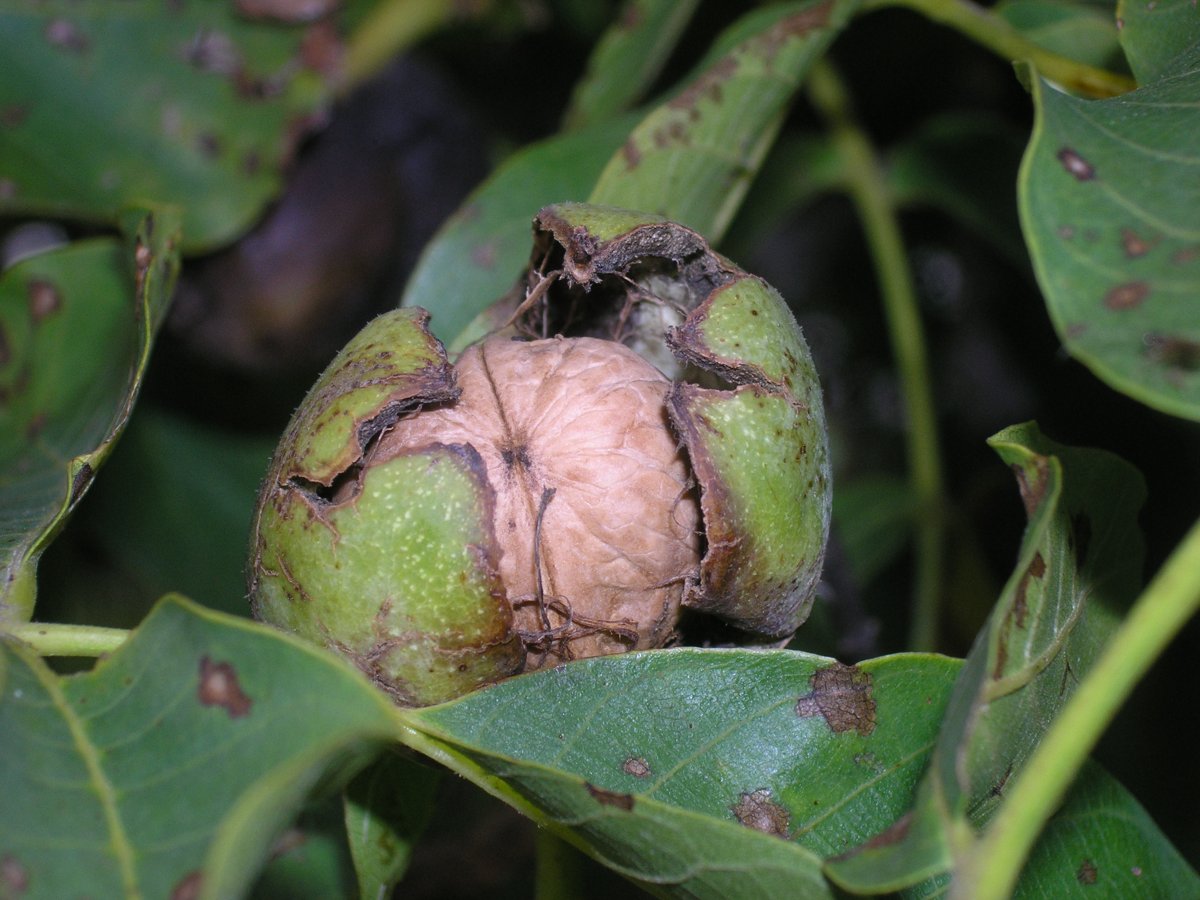
In Germany, ripe walnuts fall from the trees from late September to late October. Now, at the end of October, the season is drawing to a close. Here is how to tell a walnut tree from its look-alikes, where you may gather – and above all, how to dry the nuts so they do not go mouldy. With walnuts, mould is the real risk.
When are walnuts ripe?
Walnuts do not all ripen at once. From the first cold nights in September – for some varieties not until October – the green, fleshy husk splits open. Then the nut drops out, or it falls together with the husk, which soon turns brown.
The rule of thumb: a walnut is ripe when it falls by itself. Picking, shaking branches or knocking nuts down with sticks is unnecessary and damages the tree.
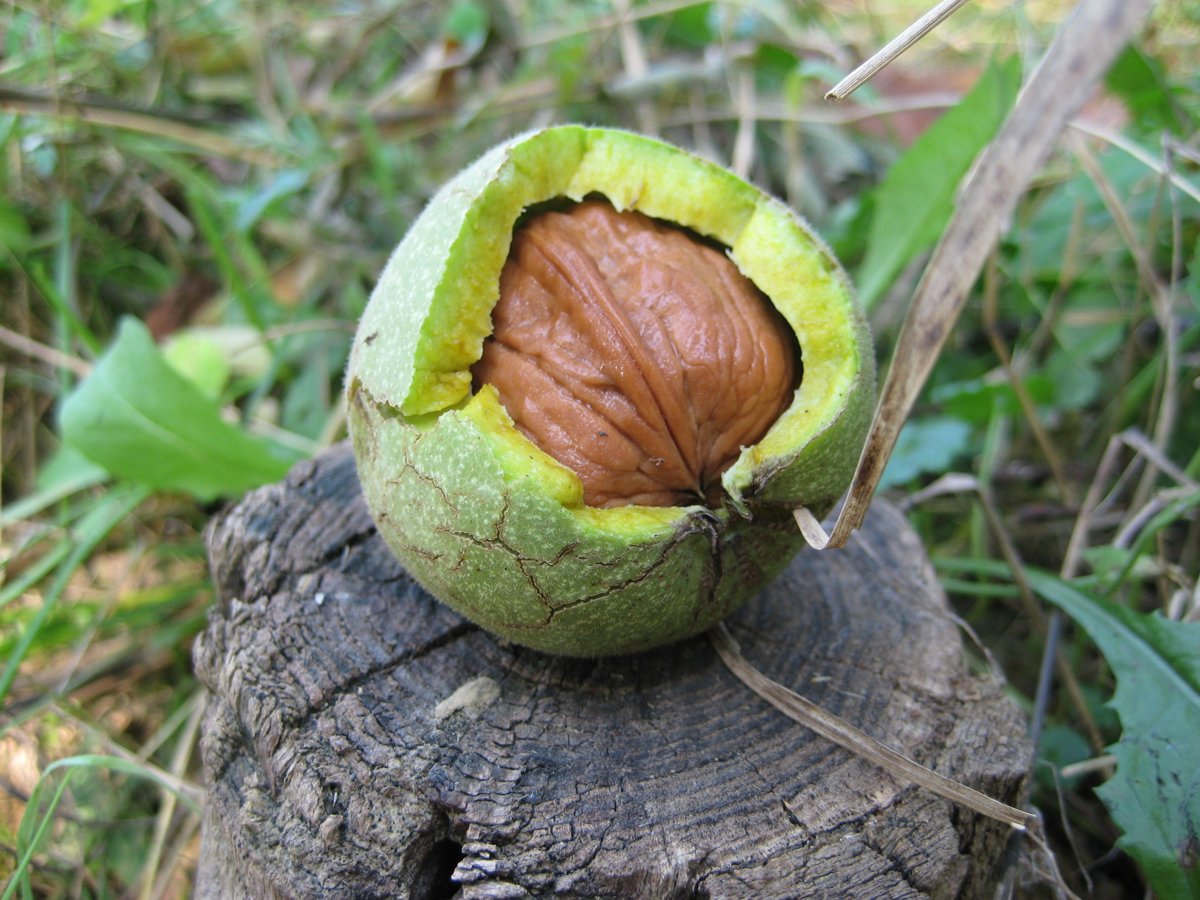
Ripe walnut: the green husk tears open and releases the nut. Photo: Jonson22, CC0.

Recognising a walnut tree
Identify the tree, not just a nut on the ground. With the common walnut (Juglans regia), these features go together:
- Leaf: pinnate, up to 40 centimetres long, with 5 to 9, usually 7 leaflets. The leaflets are elliptic to ovate and almost smooth-edged – barely toothed at all.
- Smell: crush a leaf and it gives off an aromatic scent.
- Fruit: a green husk holding the familiar light brown, wrinkled nut, 2.5 to 8 centimetres long.
- Twig: cut a young twig lengthwise and you will see the pith divided into chambers by cross walls.
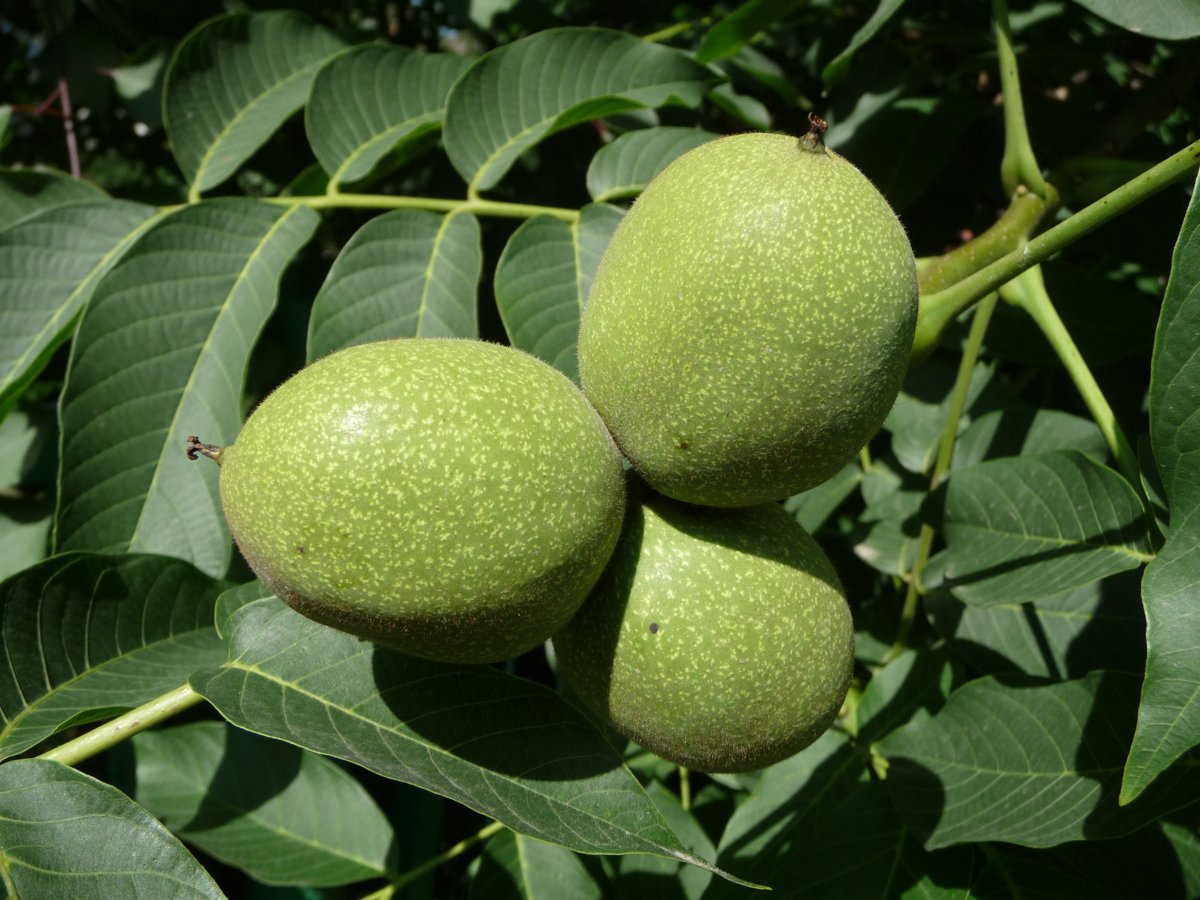
Common walnut: broad, almost smooth-edged leaflets and green fruits. Photo: George Chernilevsky, public domain.

Watch out: black walnut and wingnut
Parks and avenues are home to two relatives of the walnut that look similar from a distance. Both also have pinnate leaves – but with many more leaflets, and serrated ones.
Black walnut (Juglans nigra)
The black walnut comes from North America and is planted in Germany as an ornamental tree.
- Leaf: 30 to 60 centimetres long, with 12 to 22 or more narrow, pointed leaflets with a serrated edge.
- Fruit: roundish, 4 to 8 centimetres across, finely warty.
- Nut: dark brown, deeply furrowed, and so hard and thick-shelled that it takes a special cracker to open.
The black walnut contains the pigment juglone. It inhibits the growth of other plants and is poisonous to fish.
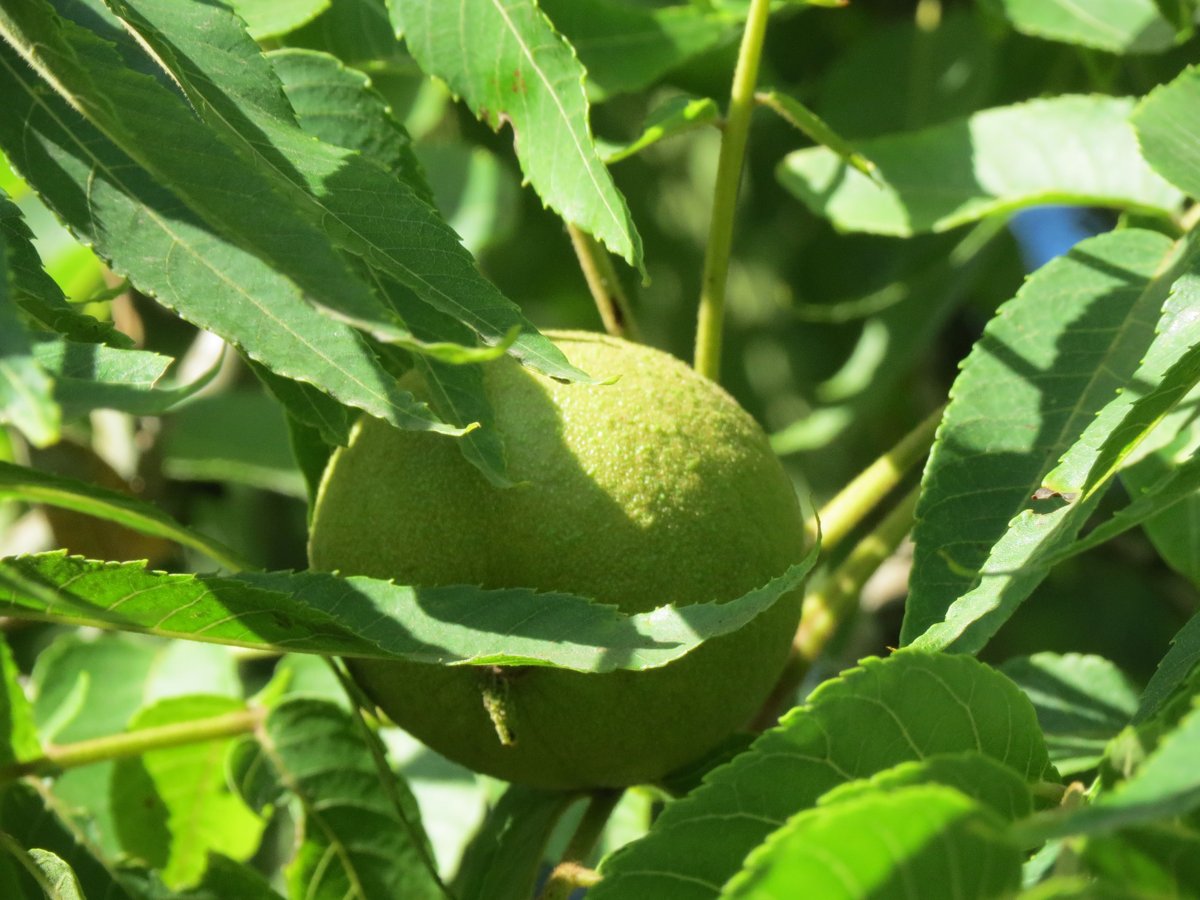
Black walnut: roundish fruit, narrow leaflets with serrated edges. Photo: AnRo0002, CC0.

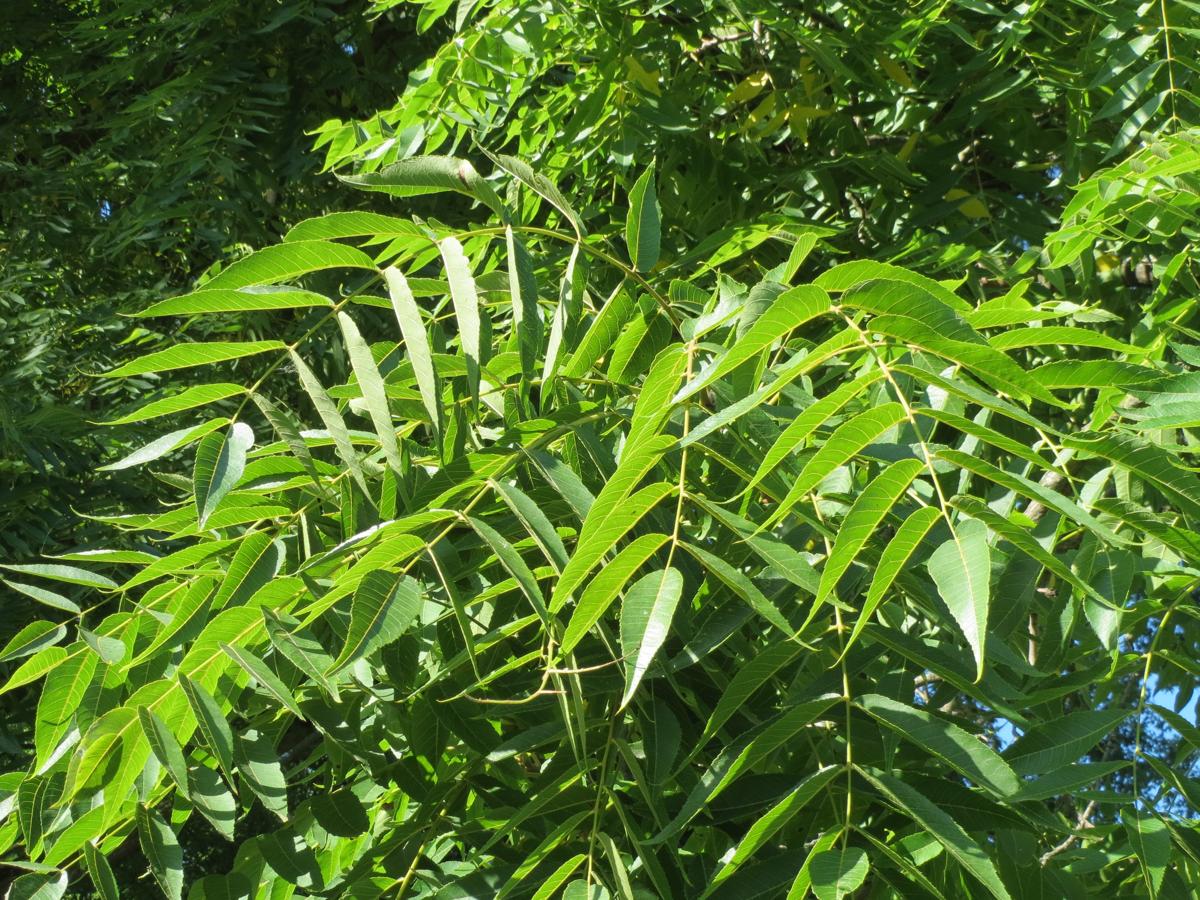
Black walnut: many narrow leaflets per leaf – the common walnut usually has seven broad ones. Photo: AnRo0002, CC0.

Caucasian wingnut (Pterocarya fraxinifolia)
The wingnut is planted in parks and large gardens, sometimes as an avenue tree. Its foliage resembles the walnut's; its fruit does not.
- Leaf: up to 60 centimetres long, with about 21 (7 to 27) stalkless, serrated leaflets.
- Fruit: not a nut in a green husk, but long, hanging chains of small nutlets, each with two semicircular wings and up to 2 centimetres wide.
Its leaves contain precursors of juglone; crushed in water, they are used to make a fish poison. The winged fruits are not walnuts – leave them on the tree.
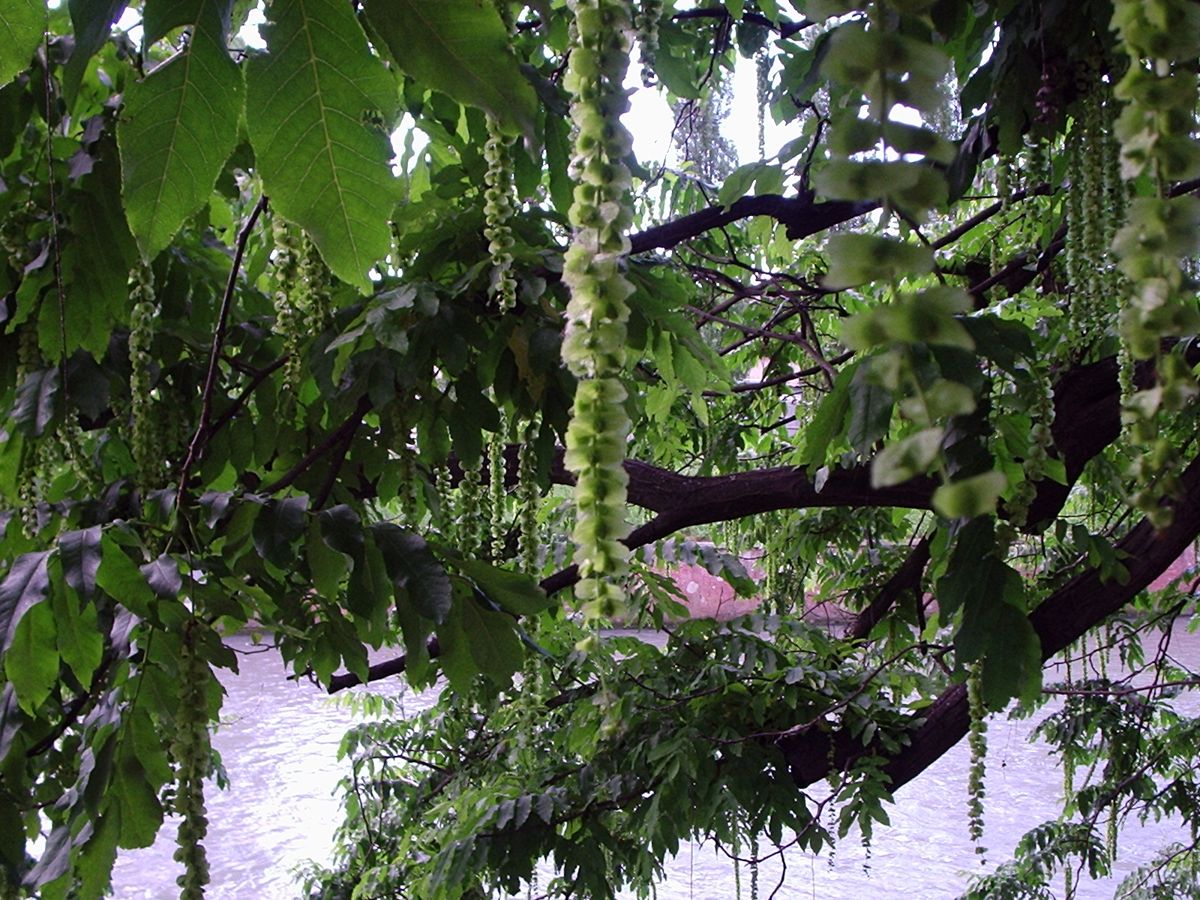
Caucasian wingnut: long chains of fruit instead of single nuts. Photo: Fontema, CC0.

The one rule
A few broad, almost smooth-edged leaflets, an aromatic scent, a green husk that splits open and the familiar light brown nut inside: only gather if everything matches the common walnut. If one feature does not fit, or you cannot identify the tree – leave it.
The real danger: mould
Walnuts are sensitive to moisture and go mouldy quickly. Moulds on nuts can produce aflatoxins. Germany's Federal Institute for Risk Assessment (BfR) counts them among the most potent naturally occurring poisons: they have a high carcinogenic potential, and cooking, baking or frying does not reduce them.
So:
- Throw mouldy nuts away – the whole nut, not "into the cake anyway".
- Black inside? Out it goes.
- Does the kernel rattle when you shake the nut? Out too – the nut is no longer fresh and the kernel has dried up.
- Black patches on the outside of the shell, on the other hand, are not a problem.
If a kernel smells musty or looks discoloured: do not eat it.
How to dry walnuts
This keeps your nuts in good condition for a long time:
- Gather often. Pick the nuts up every one to two days so they do not lie in damp grass for long.
- Wear gloves. The tannic acid in the husk stains your hands brown.
- Remove the husk, do not wash. Take off any husk remains straight away. Do not wash the nuts – water can get inside. Once they have dried off a little, remains can be rubbed or brushed away.
- Spread them out. Ideally in a single layer in crates or baskets, outdoors in the wind and the autumn sun. Give them a shake now and then.
- Not too warm. Not much more than 25 °C. An oven, a tumble dryer or a radiator makes the oily nuts bitter and rancid.
- Be patient. Allow about a month.
Then store the nuts cool, dark and dry – in sacks or crates so air can reach them. Check them now and then and sort out any suspicious ones. Dried whole walnuts keep for several months.
Where walnuts grow in Germany – and who they belong to
The walnut came to Germany from the south: it has been cultivated across much of Europe since Roman times. Its old German name "Welschnuss" means the nut from the Romance-speaking lands. It is sensitive to winter cold and late frost, which is why in Germany it often grows in mild areas such as the wine regions. In 2008 it was Germany's Tree of the Year.
In Central Europe the walnut is almost always planted: in gardens, on farms or as a single tree out in the fields. Occasionally it grows wild in the floodplain forests along the Rhine and the Danube.
What that means for gathering:
- Most walnut trees belong to someone – a municipality, a farmer or the neighbours. Their nuts belong to the owner, even once they are lying on the ground. Only gather there if it is explicitly allowed, for example at trees with a yellow ribbon. Or simply ask.
- Wild trees: Germany's Federal Nature Conservation Act allows, in section 39(3), wild fruit to be gathered with care in small quantities for personal use – in places you are allowed to enter.
- Protected areas: nature reserves can have their own bans. Look out for signs.
Walnuts are not the only thing falling in October. To tell sweet chestnuts from horse chestnuts, read Sweet chestnut or horse chestnut?
Quick checklist
- Leaf with usually 7 broad, almost smooth-edged leaflets and an aromatic scent? → Common walnut.
- Many narrow, serrated leaflets and a roundish, finely warty fruit? → Black walnut. Long chains of winged fruits? → Wingnut.
- Only gather nuts that have fallen by themselves – every one to two days.
- Husk off, no washing, dry in an airy place at no more than about 25 °C.
- Mould, black inside or a rattling kernel? → Throw it away.
- Only where you may: yellow ribbon, the owner's permission, or wild trees in small quantities.
Find walnuts near you
The Fruit Pin map shows freely accessible finds – fruit trees, nuts, berries and herbs. Set the filter to Nuts and In season to see what may be ripe near you right now.
A pin on the map does not replace identifying the tree on the spot: always look at the leaf, fruit and nut yourself.
Know a walnut tree in a freely accessible place? Add it with Add Pin so others can find it too.
Before you pick
Identify every plant yourself with certainty before you eat it. Entries on this map come from users and are not verified by us. When in doubt, do not consume.