Sweet chestnut or horse chestnut? How to tell them apart
In October both lie under the trees. How to tell the sweet chestnut from the poisonous horse chestnut by leaf, husk and nut.
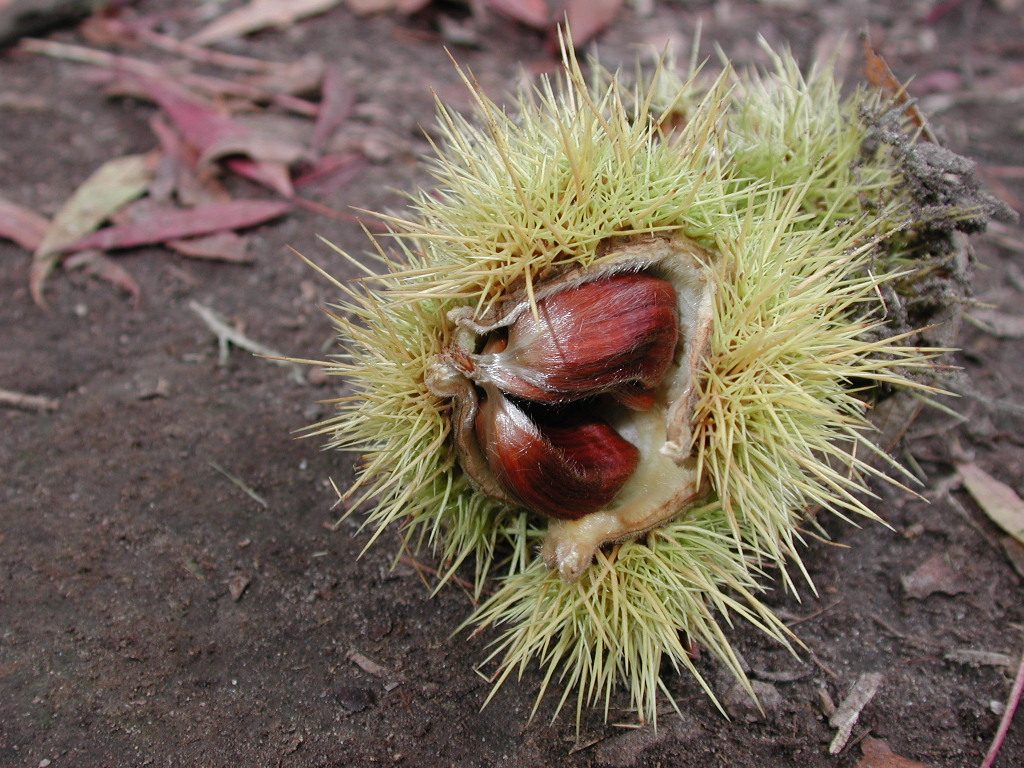
In early October there is a crunch underfoot beneath many trees: the chestnuts are falling. But "chestnut" means two completely different trees. The sweet chestnut (Castanea sativa, also called Spanish chestnut or marron) gives the nuts that are sold roasted at street stalls in winter. The horse chestnut (Aesculus hippocastanum) grows in parks, avenues and schoolyards – its seeds are poisonous. Both ripen in autumn, and both sit in a spiny husk. Here is how to tell them apart.
Two trees, not related
The sweet chestnut belongs to the beech family, so it is related to beech and oak. The horse chestnut belongs to the soapberry family. It comes from the Balkans and has been planted in Central Europe since the 16th century. The two only share a name because their fruits look alike: a brown kernel in a spiny case.
Watch out: the horse chestnut
The poison information centre in Bonn (Germany) rates the horse chestnut as mildly poisonous. All parts of the plant are poisonous, especially the green husks and unripe fruits. The cause is saponins. According to the poison centre, eating horse chestnuts can lead to nausea, stomach pain and vomiting.
Depending on the species, horse chestnuts flower white, red or yellow. For all of them: the seeds do not belong in the kitchen.
If a child has swallowed a horse chestnut, call the poison control line (Giftnotruf) for your federal state or get medical help.
Feature by feature
Always identify the tree itself – never a single nut picked up from the ground.
The leaf (the most important feature)
- Sweet chestnut: a single, long and narrow leaf, 12 to 20 centimetres long and only 3 to 6 centimetres wide. The edge is serrated, and every tooth ends in a fine, forward-pointing tip. The leaves are staggered along the twig.
- Horse chestnut: a large, hand-shaped compound leaf made of five or seven leaflets that radiate from the end of a long stalk. The leaves sit in opposite pairs on the twig.
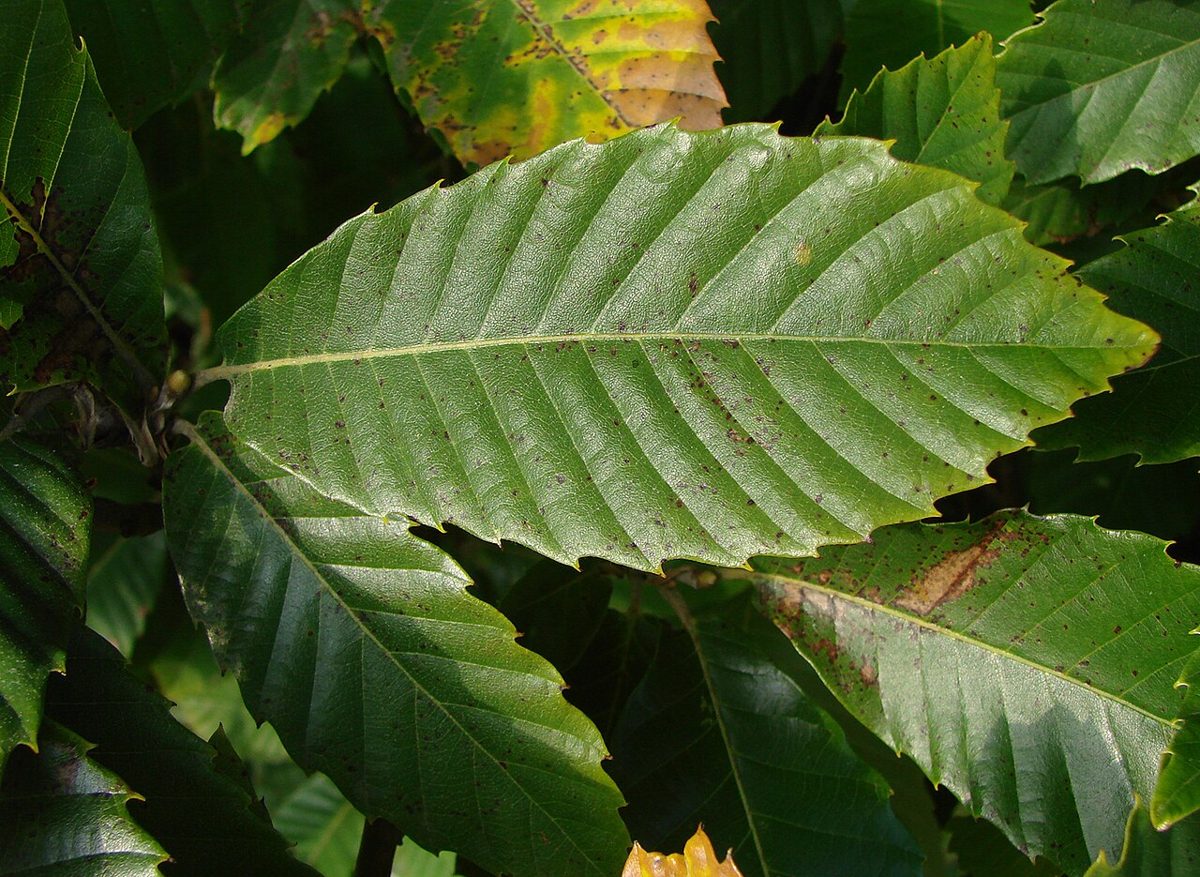
Sweet chestnut: a single, long and narrow leaf with a serrated edge. Photo: Vassil, public domain.

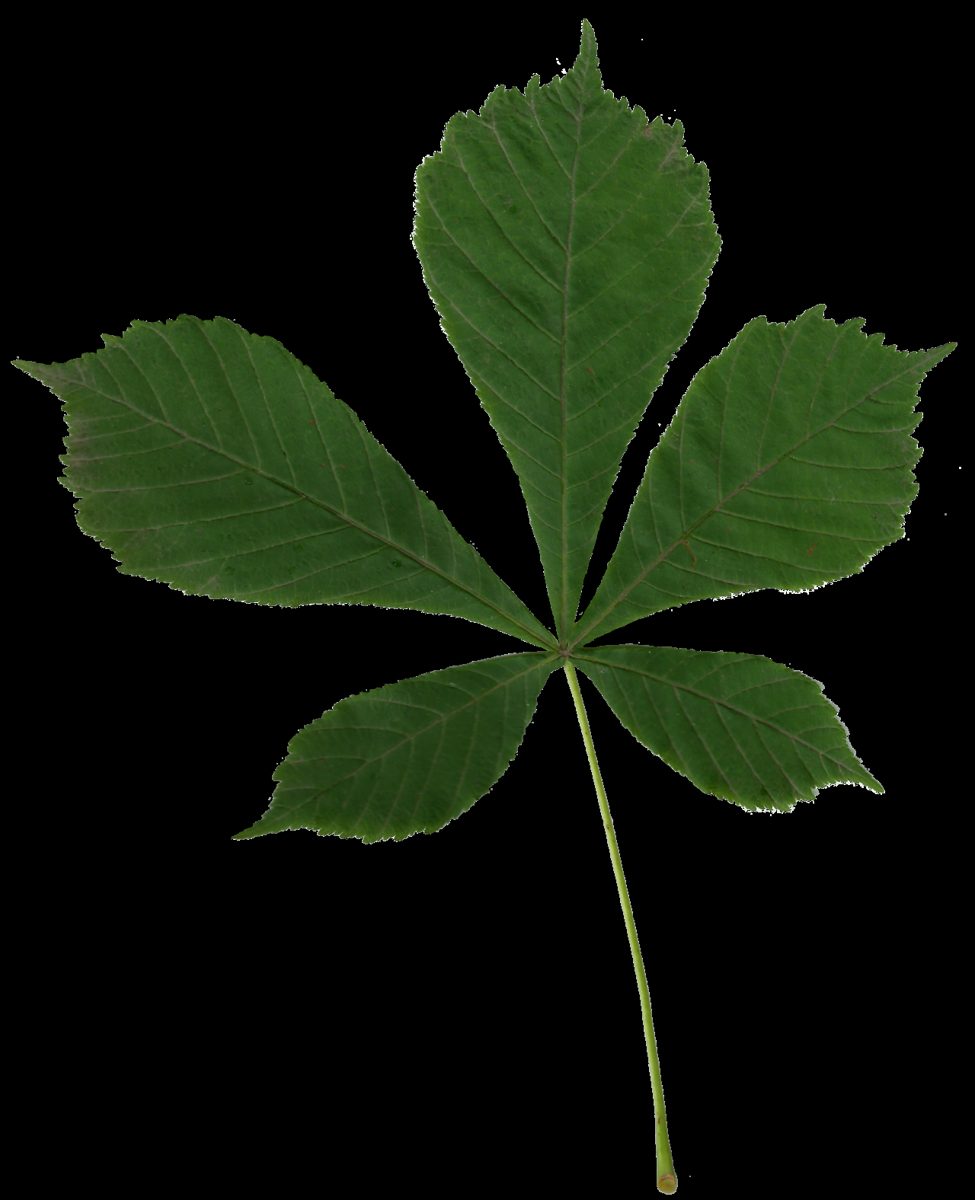
Horse chestnut: a compound leaf of five leaflets on a long stalk. Photo: Andrikkos, public domain.

On the tree this is the easiest feature to see – even once the leaves change colour in October.
The husk
- Sweet chestnut: a cup densely covered in long, fine spines – like a small hedgehog. When ripe it splits into four flaps and releases one to three nuts.
- Horse chestnut: a thick, leathery capsule with shorter, more widely spaced spines. Inside there is usually a single seed, rarely up to three.
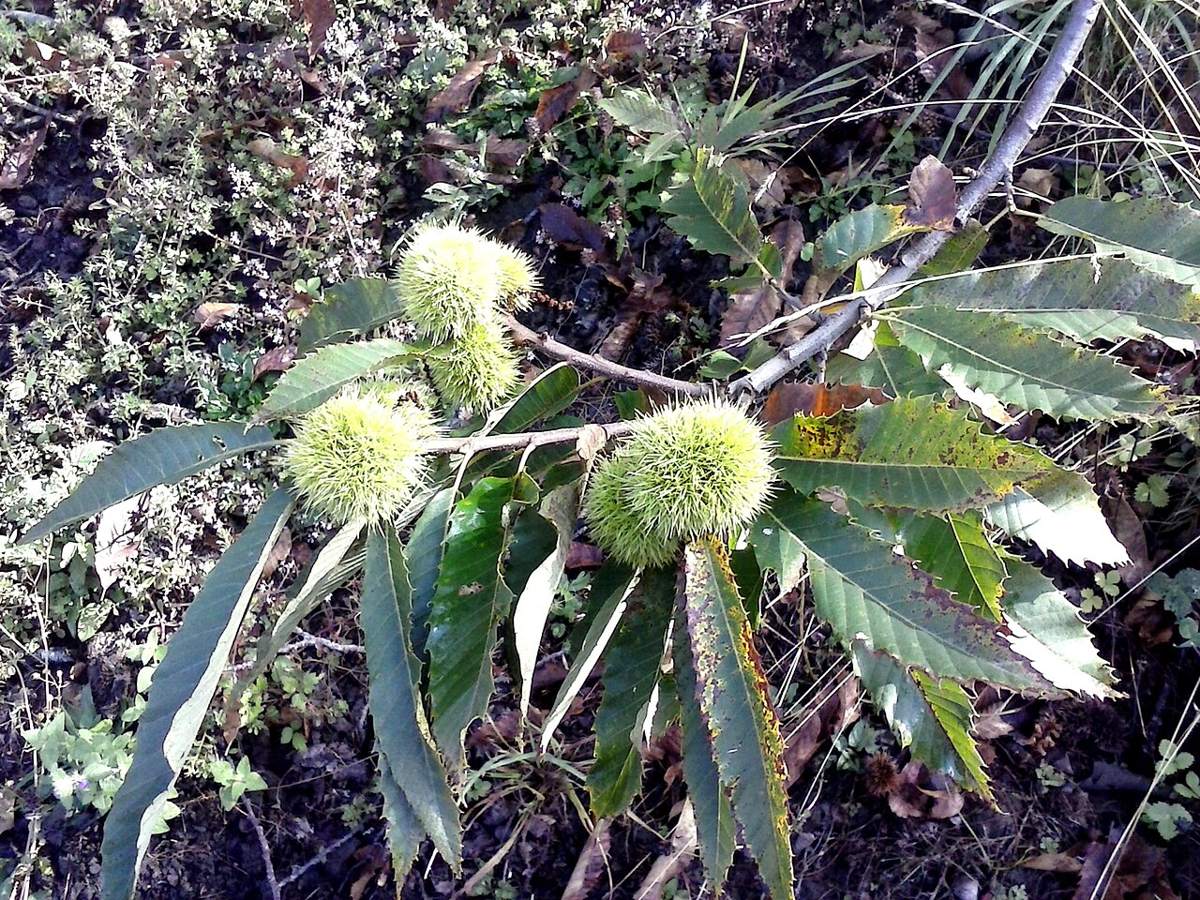
Sweet chestnut: husks as dense as a hedgehog, with the long, narrow leaves in between. Photo: fotokoci, CC0.
.jpg)
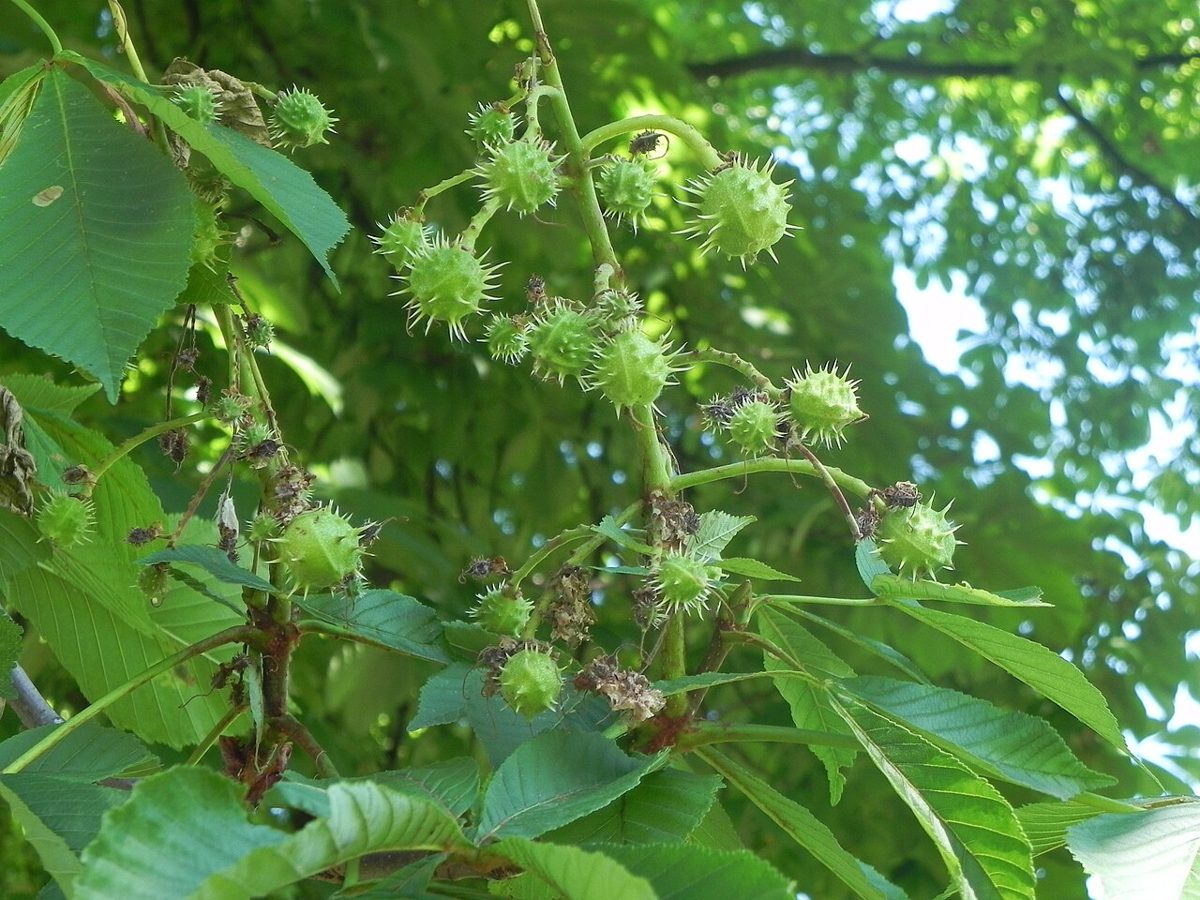
Horse chestnut: green capsules with a few short spines. Photo: Andrikkos, public domain.

The nut
- Sweet chestnut: glossy brown, with a small, hairy tip on top (the remains of the flower and styles). When two or three nuts share a husk, they are often flattened where they touched.
- Horse chestnut: smooth, glossy, round to slightly flattened – with no tip.
Note: the pale patch on the underside is not a distinguishing feature. Both nuts have one.
The one rule
Leaf, husk and nut must all three match the sweet chestnut. If even one does not, or if loose nuts lie under a tree you cannot identify: leave them where they are.
Where sweet chestnuts grow in Germany
The sweet chestnut likes warmth and acidic soil and avoids lime. Its main areas in Germany are the Palatinate – where the nuts are called "Keschde" – and the valleys of the Nahe, Saar and Moselle. It is also fairly common in the Upper Rhine Plain, the western Black Forest, the Odenwald, along the lower Main and in the Taunus.
Further north it grows mainly as a park and timber tree: north of roughly the 48th to 50th parallel, the nuts do not ripen reliably. The Romans brought it to Germany and used its weather-resistant wood, among other things, for vineyards. In 2018 the sweet chestnut was Germany's Tree of the Year.
What the law says about picking
Germany's Federal Nature Conservation Act allows, in section 39(3), wild fruit to be gathered with care in small quantities for personal use – in places you are allowed to enter. That means:
- Not in gardens, on private land or in managed chestnut groves – those trees belong to someone.
- Protected areas: nature reserves can have their own bans. Look out for signs.
- Small quantities only. Gathering commercially needs a permit from the nature conservation authority.
- Leave some behind. Squirrels, dormice, jays and crows store the nuts for winter. Forgotten chestnuts sprout in spring – that is how the tree spreads.
From the find to the kitchen
Fresh sweet chestnuts contain a lot of water and sugar, so they spoil quickly. Use them soon or preserve them: dry them, keep them cold or freeze them.
- Sort: throw out nuts with small holes. They can hide the larvae of chestnut weevils or chestnut moths, which eat the inside.
- Score: before roasting or boiling, cut a cross into the shell on the rounded side. Otherwise it can burst in the heat.
- Roast: in a hot oven or a pan until the shell curls open at the cuts and the inside is soft. Then peel them, removing the thin brown inner skin as well.
Roasted chestnuts taste sweet, nutty and a little floury. Boiled, they go well with poultry or in autumn salads.
Quick checklist
- Leaf long and narrow with a serrated edge? → Sweet chestnut. Compound with 5 to 7 leaflets? → Horse chestnut.
- Husk as dense as a hedgehog, one to three nuts? → Sweet chestnut.
- Nut with a small, hairy tip? → Sweet chestnut.
- One feature does not match? → Leave it.
- Small quantities only, only where you may enter, never in someone else's garden.
Find sweet chestnuts near you
The Fruit Pin map shows freely accessible finds – fruit trees, nuts, berries and herbs. Set the filter to Nuts and In season to see what may be ripe near you right now.
A pin on the map does not replace identifying the tree on the spot: always look at the leaf, husk and nut yourself.
Know a sweet chestnut tree in a freely accessible place? Add it as a new spot so others can find it too.
Before you pick
Identify every plant yourself with certainty before you eat it. Entries on this map come from users and are not verified by us. When in doubt, do not consume.