Medlars – the old fruit that has to go soft first
Medlars ripen in late October but are hard and astringent straight off the tree. How to recognise them, how they soften and what to make from them.
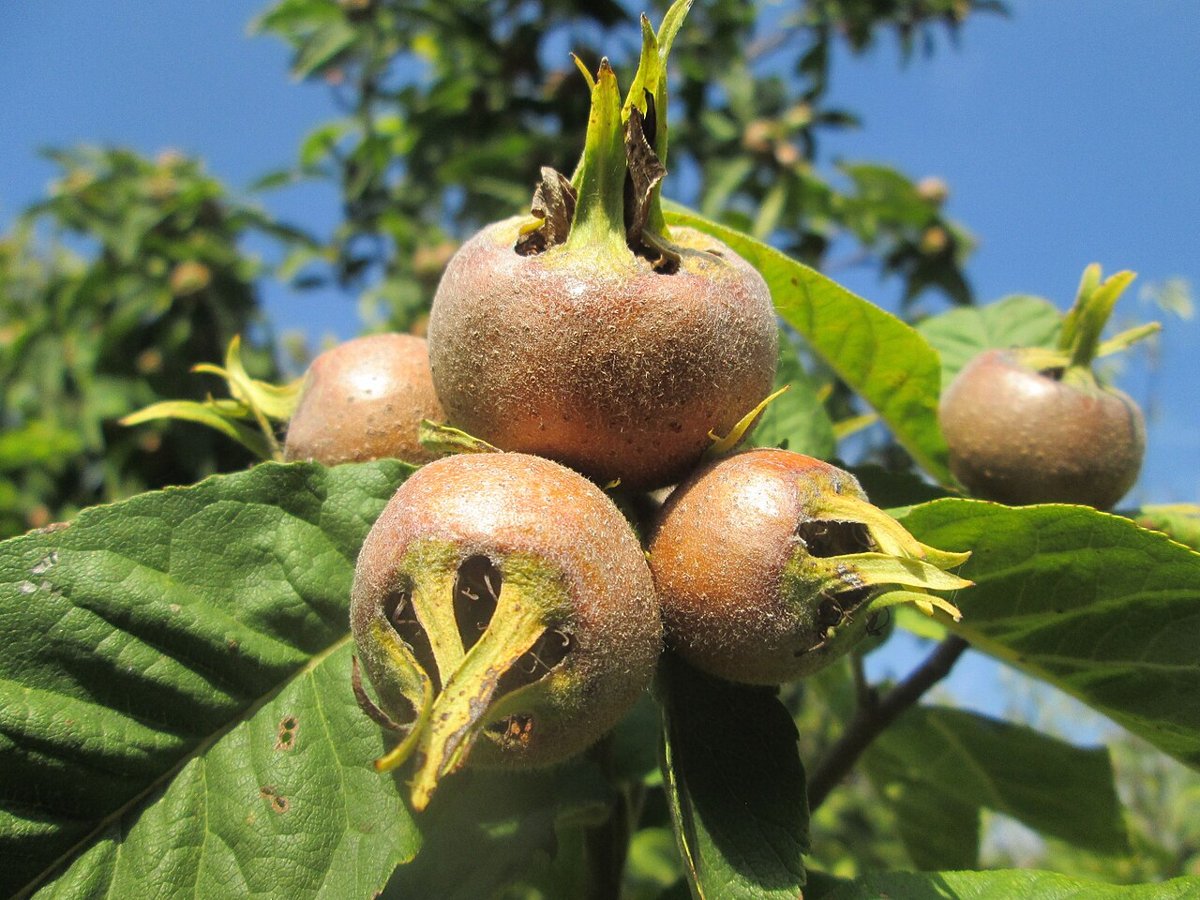
It looks like a small brown cross between an apple and a rose hip, and most people walk straight past it: the medlar (Mespilus germanica). It used to be a common fruit tree across central and southern Europe – Charlemagne listed it in his estate ordinance among the fruit trees to be grown on the royal estates. Today it has become rare. Its fruit ripens from late October to early November, but straight off the tree it is rock hard and astringent. Here is how to recognise a medlar and why you have to let the fruit rest before eating it.
How to recognise a medlar
- Growth: a small tree or large shrub, usually only five to six metres tall, often with a crooked trunk and a broad, rounded crown. Many medlars are wider than they are tall.
- Leaves: simple, elongated, six to twelve centimetres long, dark green above and felty-hairy underneath.
- Flowers: in May and June, strikingly large (three to five centimetres), white to pale pink, borne singly on short shoots.
- Fruit: orange-brown to brown, round, finely hairy. The top is open and crowned by long sepals – the key feature. Inside are two to five very hard stones.
- Thorns: The wild form has thorns; cultivated varieties usually do not.
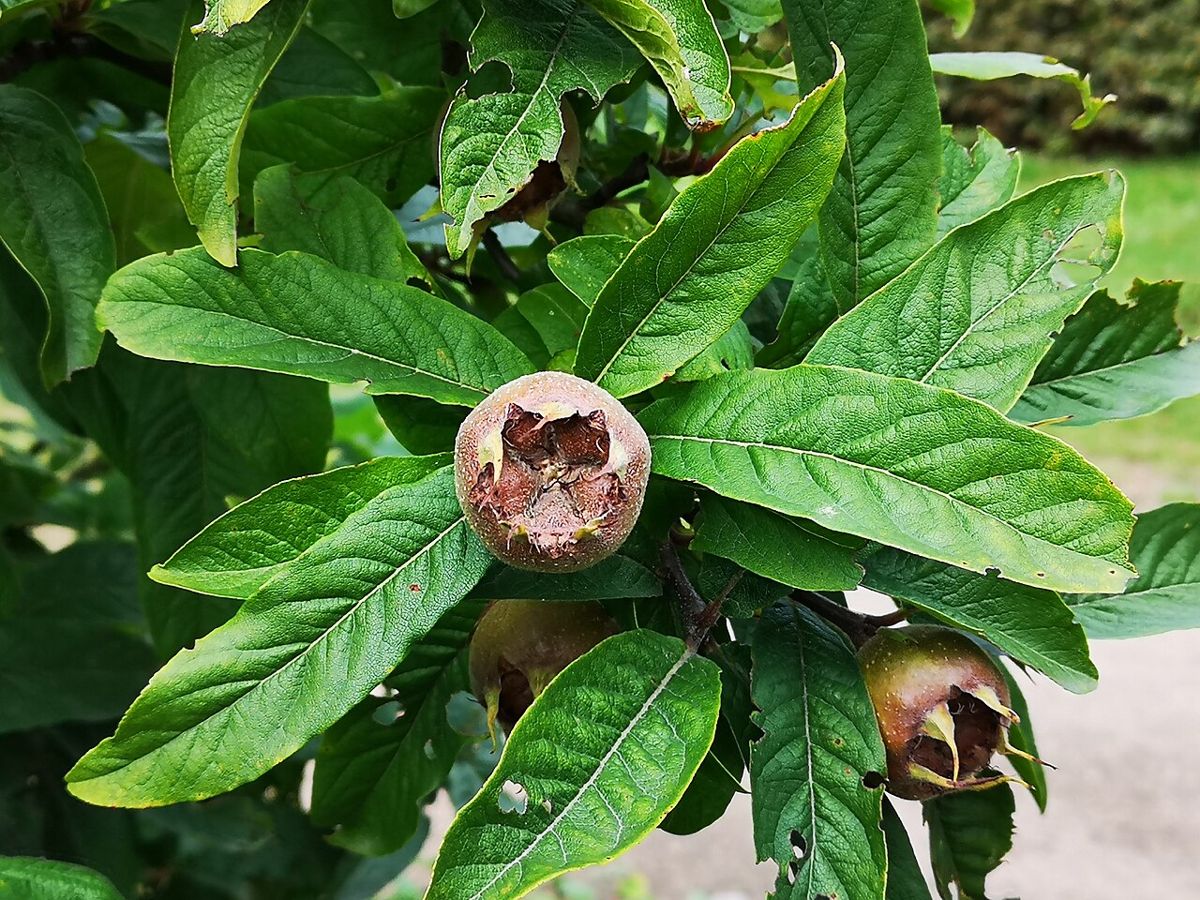
Typical medlar: the open tip with its crown of sepals. Photo: Abubiju, CC0.

Fruit of the wild form is only one and a half to three centimetres across; garden varieties are much larger.
Why medlars have to go soft first
Freshly picked, a medlar is hard and makes your mouth pucker. Tannins and fruit acids are to blame. Only after frost or longer storage do they break down: the sugar content rises, and the flesh turns brown, soft and mellow, with a sweet, tangy, aromatic taste. In English this softening is called bletting.
Here is how:
- Pick the hard fruit in late October or November – or after the first frosty nights.
- Spread them out side by side, in a single layer, somewhere cool.
- Wait until the skin is dark brown and the fruit gives when pressed. This can take a while – check every few days.
- Sort out any fruit that turns rotten or mouldy.
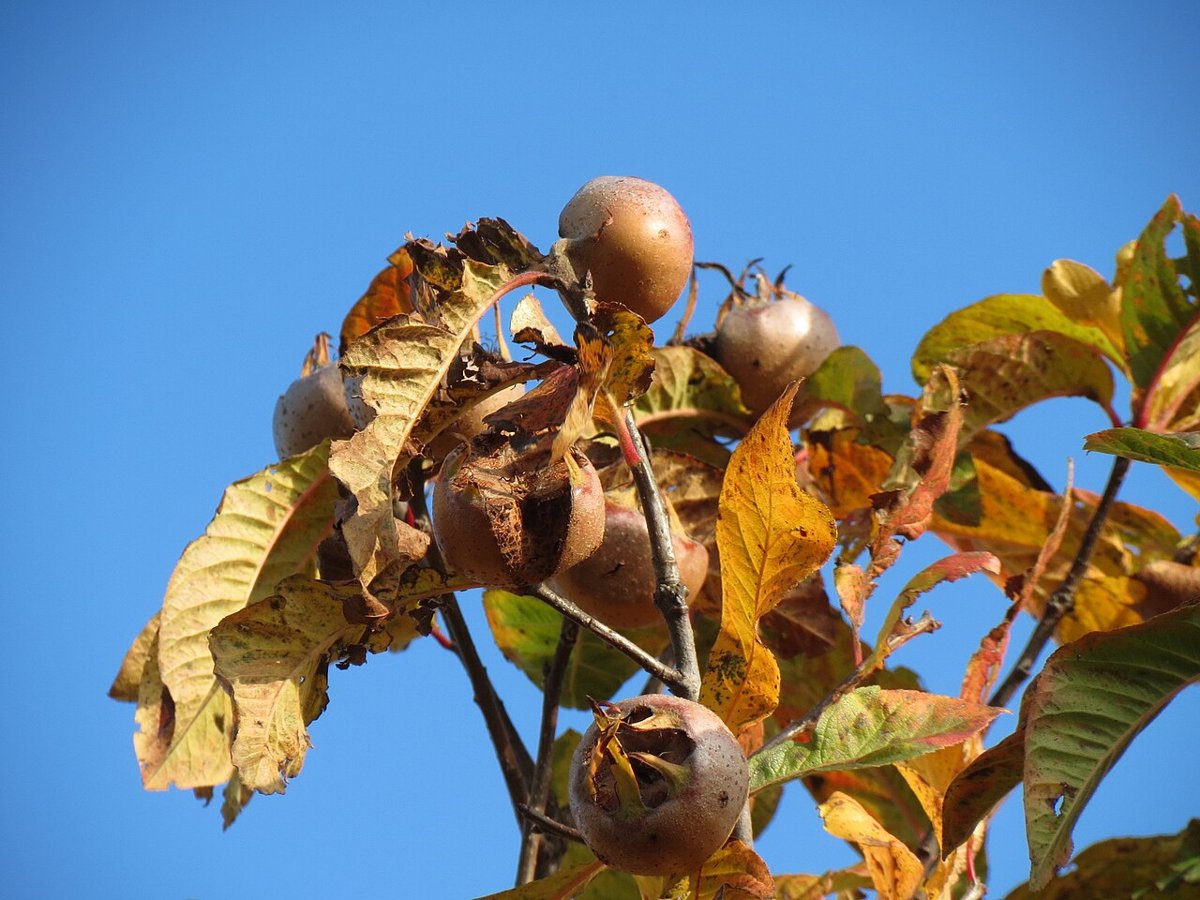
Mid-November: the leaves are turning, the fruit is still hanging. Photo: AnRo0002, CC0.

What to make from medlars
- As they are: Break open the soft fruit, spoon out the flesh and spit out the hard stones.
- Jam and jelly: Simmer the bletted fruit with a little water until soft and press through a sieve – the stones stay behind.
- Dessert: The purée works in a parfait or stirred into yoghurt.
In Saarland, in south-west Germany, the medlar goes by the earthy nickname "Hundsärsch" – and so does a schnapps distilled from its fruit.
Not every "medlar" is a medlar
The Japanese loquat is sometimes called a medlar too – the German "Mispelchen" served in Frankfurt, a small glass of calvados with a pickled fruit, is made with it. It is an entirely different plant from East Asia. When you forage in autumn, you are looking for the brown fruit with the open, sepal-crowned tip.
Where to find medlars
The medlar likes warmth and grows best on moist, well-drained loamy soils. Its original home is probably western Asia and south-eastern Europe. It has been known in central Europe for centuries and has gone wild in several areas. The German city of Heidelberg supports its medlar trees with its own conservation programme.
Most medlars were planted at some point – which means they belong to someone. Fruit on a tree belongs to the owner of the land, even if a branch hangs over the path or the fruit is already lying on the ground. So only pick if the tree is freely accessible and harvesting is allowed – for example with a yellow ribbon – or if you have asked the owner.
Quick checklist
- Brown, round fruit with an open tip and long sepals? → Medlar.
- Picked hard? → Store somewhere cool until brown and soft.
- Do not eat the stones – they are rock hard.
- Only harvest from trees where picking is allowed.
Find medlars near you
Because the medlar has become so rare, every known tree counts. On the Fruit Pin map you will find medlars under Fruit; the In season filter shows what may be ripe right now.
A map entry does not replace identifying the plant on the spot: always look at the fruit and leaves yourself.
Know a medlar in a freely accessible, released spot? Add it as a new spot – so this old fruit is not entirely forgotten.
Before you pick
Identify every plant yourself with certainty before you eat it. Entries on this map come from users and are not verified by us. When in doubt, do not consume.