Foraging sloes – why they taste better after frost
Sloes ripen in October but only taste good after frost. How to recognise blackthorn, what to make from sloes and which berries look similar.
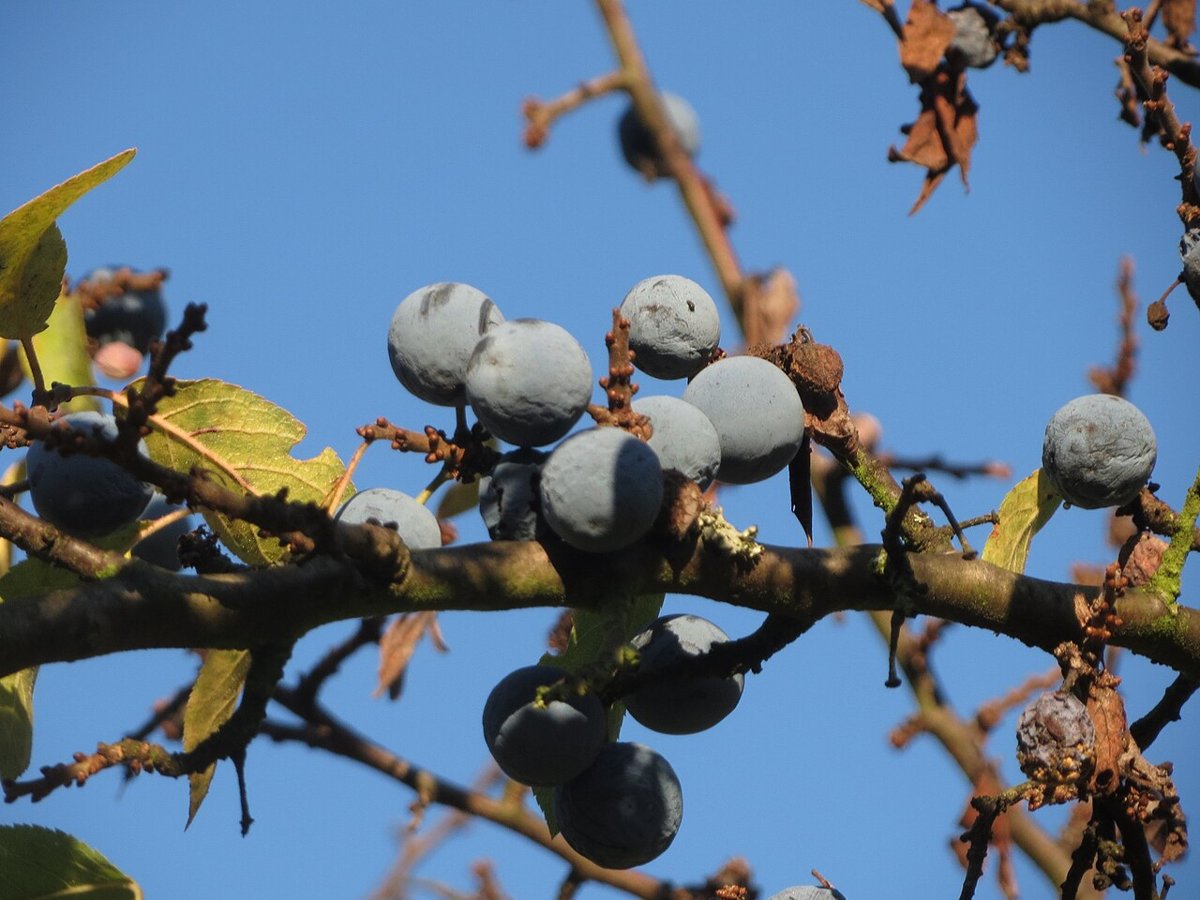
In late autumn they crowd the thorny hedgerows: small, round, blue-black fruit with a pale haze. These are sloes, the fruit of blackthorn (Prunus spinosa). The Poison Information Centre in Bonn classifies sloes as non-toxic. Fresh from the bush, though, they are so sour and astringent that your mouth puckers. Here is why waiting pays off, how to recognise the shrub, and which berry you should not mix it up with.
How to recognise blackthorn
- Growth: a dense, spiky shrub, usually around three metres tall, often forming an almost impenetrable hedge.
- Thorns: lots of them. Short side shoots stick out at almost a right angle and end in a sharp thorn.
- Bark: dark, turning black from the second year – hence the name blackthorn.
- Leaves: small, oval, with a toothed edge. They sit alternately along the twig.
- Flowers: from March, white, before the leaves come out. If you see white hedges without leaves in spring, you know where to find sloes in autumn.
- Fruit: small, round, blue-black with a pale blue bloom you can wipe off. Sloes sit singly or in pairs on the twig. The flesh is greenish, with a single stone inside.
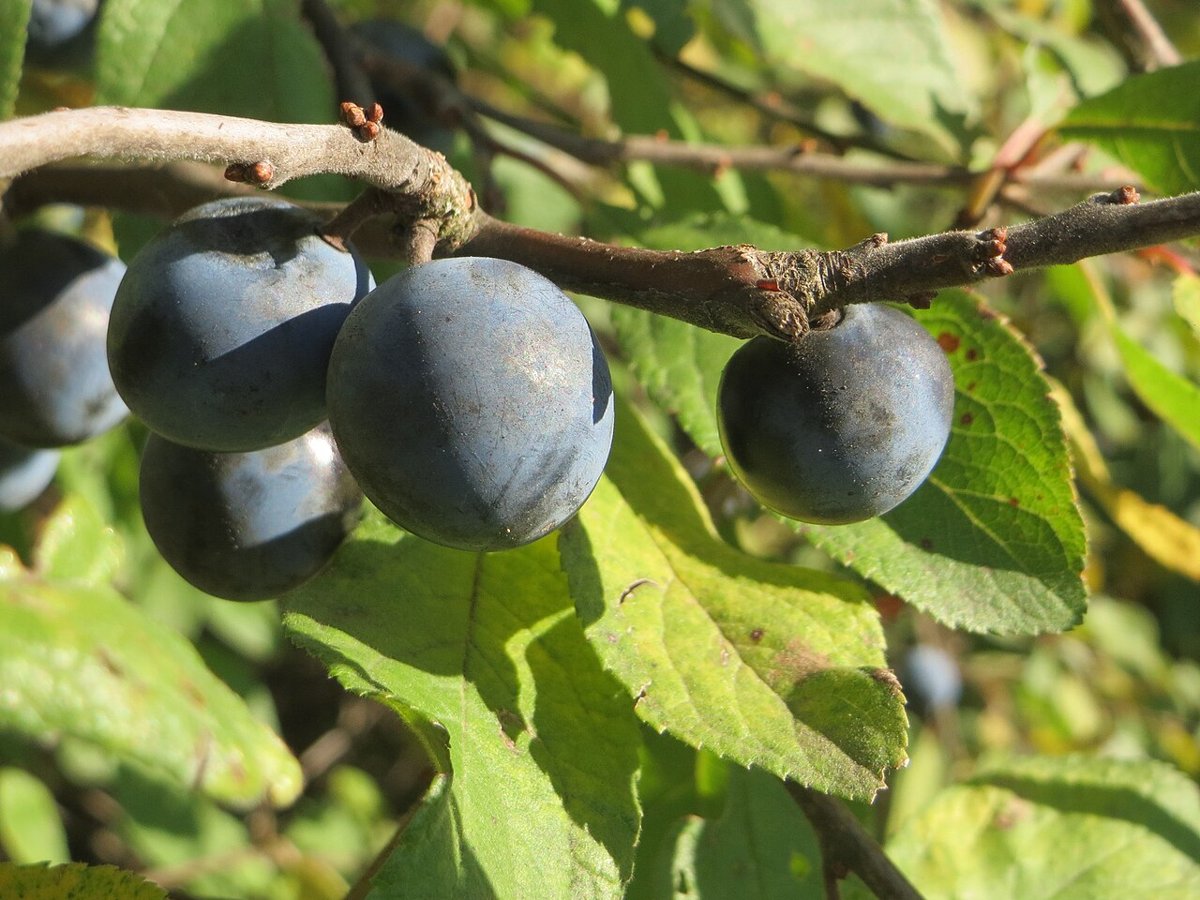
Sloes in October: bloomed fruit, oval toothed leaves. Photo: AnRo0002, CC0.

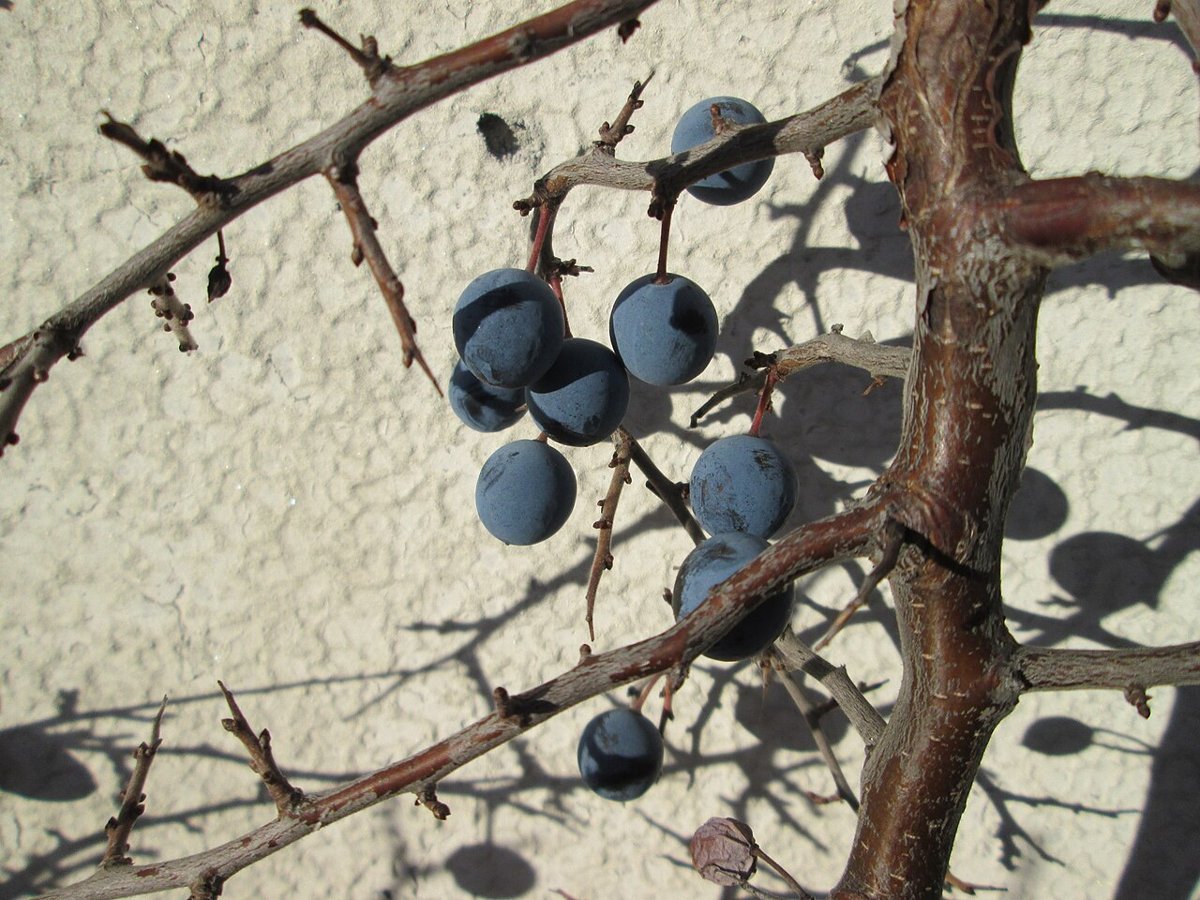
Late November: the leaves are gone, thorns and fruit remain. Photo: AnRo0002, CC0.

Watch out: privet
In autumn, many shrubs carry black berries. One that often grows nearby is wild privet (Ligustrum vulgare) – a popular hedge plant in gardens, parks and along woodland edges. The Poison Information Centre in Bonn classifies it as mildly toxic. Larger amounts of the berries can cause nausea, vomiting and diarrhoea.
How to tell them apart:
- Sloe: thorny twigs · fruit single or in pairs · matt with a blue bloom · one stone
- Privet: no thorns · berries in clusters at the tip of the twig · glossy black · two seeds · narrow leaves in opposite pairs
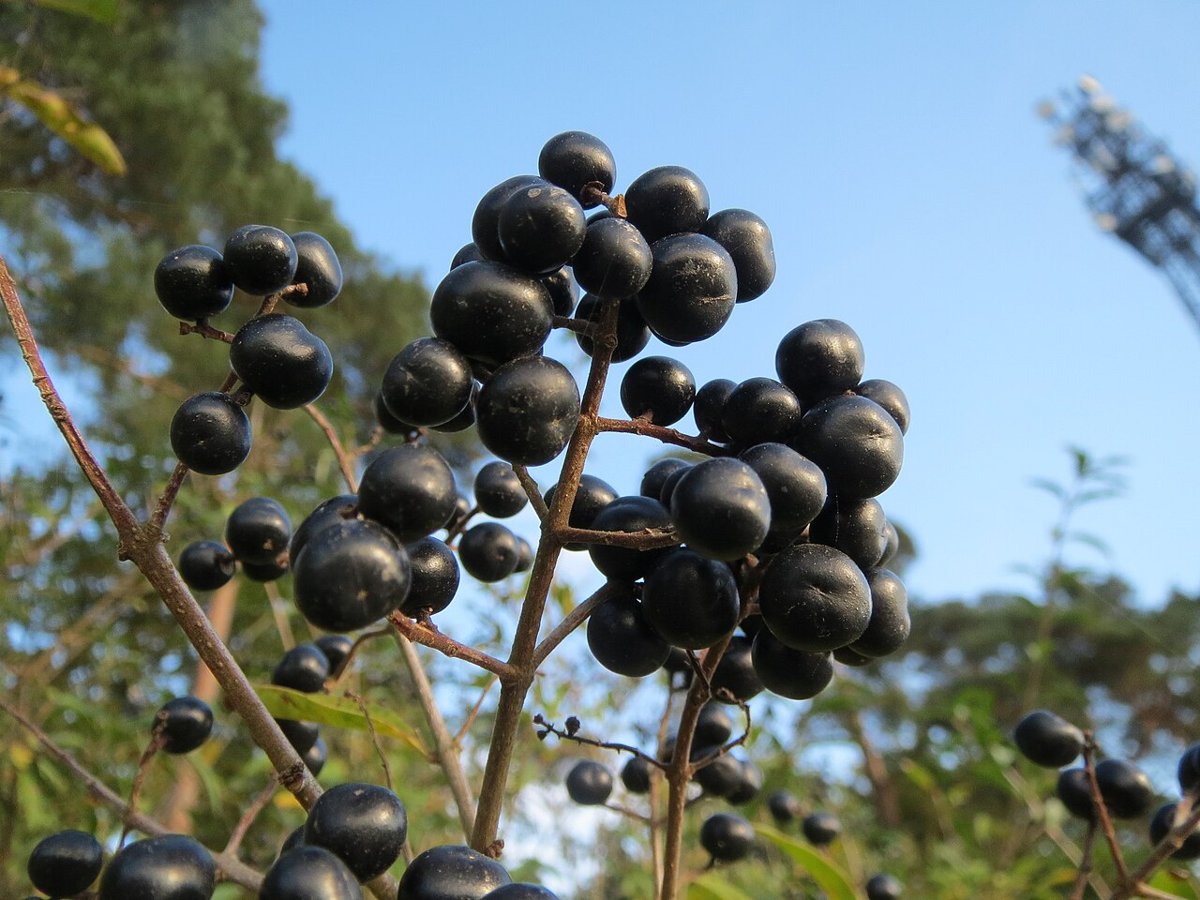
Privet: glossy black berries in clusters, no thorns – leave them. Photo: AnRo0002, CC0.

The rule: Thorns, bloomed fruit and a single stone – all three have to match. If one is missing, leave the fruit where it is.
Why sloes taste better after frost
Sloes ripen from October into November. At first the flesh is very sour and astringent. Only after frost does it become milder and more aromatic. Because the fruit stays on the bush well into winter, you can easily wait for a few cold nights.
Many recipes suggest freezing early-picked sloes for a few days to imitate frost. We have not found a reliable source showing that this works just like frost on the bush. Try it and compare for yourself.
What to make from sloes
Traditionally, sloes are steeped in late autumn for liqueurs and other drinks – sloe gin is the best-known example. They also work well for juice, syrup and jelly. For jelly and juice, simmer the fruit in a little water until soft and strain.
The stones: As with most plants in the genus Prunus – which also includes plums, cherries and apricots – the seeds contain amygdalin, which can release hydrogen cyanide. So leave the stones whole: do not crack, grind or blend them.
The rules for foraging
In Germany, Section 39(3) of the Federal Nature Conservation Act allows anyone to gather wild fruit in small amounts for personal use, with care, in places they are allowed to enter.
- Hedges along fields and pastures usually belong to someone. Only pick where you do not have to leave the path and no private land begins.
- Protected areas: Watch for signs; separate bans may apply.
- Thorns: Sturdy gloves and long sleeves will save you scratches.
- Leave plenty behind. Animals eat the fruit and spread the seeds in their droppings – that is how new blackthorn hedges grow.
Outside Germany, other rules apply – check what is allowed where you are.
Quick checklist
- Thorny shrub with black bark and small, toothed leaves? → Blackthorn.
- Fruit round, blue-black, bloomed, with one stone? → Sloe.
- Glossy black berries in clusters, no thorns? → Privet, leave them.
- Best picked after the first frosty nights.
- Keep the stones whole, take small amounts only.
Find sloes near you
The Fruit Pin map shows freely accessible spots. You will find sloes under Berries; the In season filter shows what may be ripe right now. A map entry does not replace identifying the plant on the spot: always check the thorns, fruit and stone yourself.
Know a blackthorn hedge along a public path? Add it as a new spot. Wild roses often grow right beside it – our article on rose hips shows you how to use them.
Before you pick
Identify every plant yourself with certainty before you eat it. Entries on this map come from users and are not verified by us. When in doubt, do not consume.