Foraging rose hips – when to pick and how to use them
Rose hips glow on wild roses from September into winter. When to pick them, how to remove the seeds and what to make from them.
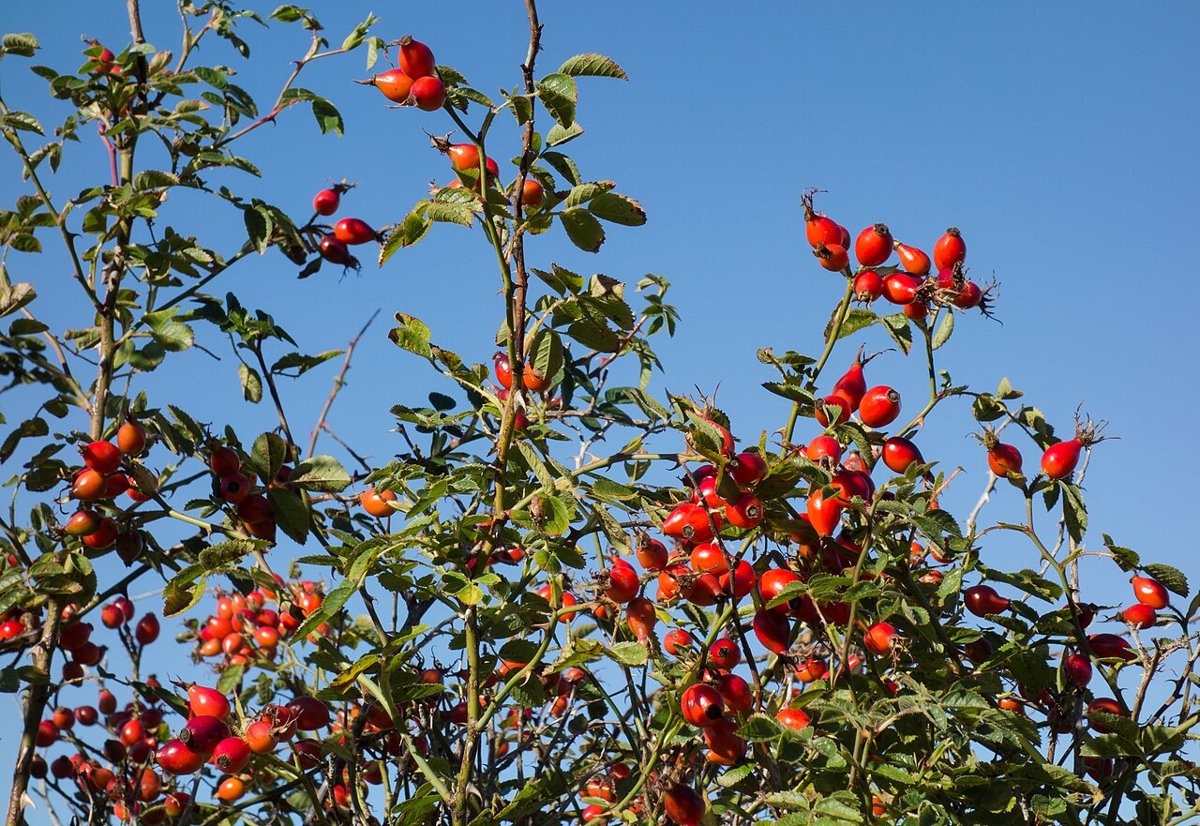
When the leaves start to turn, they light up woodland edges and hedgerows: rose hips, the fruit of wild roses. The one you will meet most often is the dog rose (Rosa canina). The Poison Information Centre in Bonn classifies its hips as non-toxic. With a little patience for the seeds, they turn into purée, jam or tea. Here is how to recognise the dog rose, when to pick, and the one thing to watch out for when you prepare them.
How to recognise the dog rose
- Growth: a shrub, often several metres tall, with long arching branches.
- Prickles: strong, hooked like a sickle and broad at the base – especially on young shoots.
- Leaves: pinnate, usually made up of five or seven toothed leaflets.
- Flowers: in early summer, pink to almost white, with five petals.
- Fruit: red, smooth, oval to elongated. Inside sit many small, rock-hard nutlets.
The dog rose likes woodland edges, slopes, hedges and old stone walls. Other wild roses produce hips too; the dog rose is simply the most common.
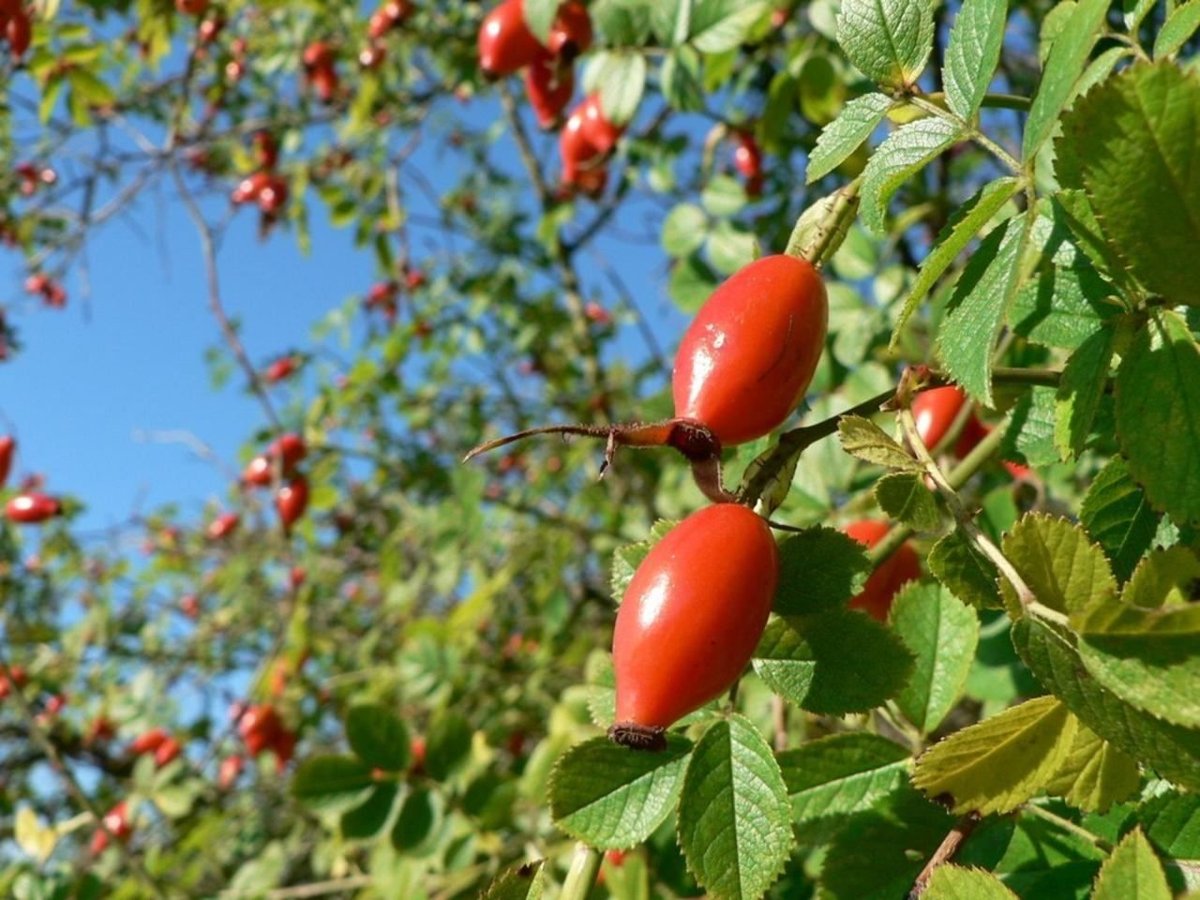
Dog rose hips: smooth, red and elongated. Photo: Rosendahl, public domain.

Botanically, a rose hip is a false fruit: the red flesh grows from the base of the flower. The rose's actual fruits are the hard nutlets inside.
The one thing you need to know: the hairs
The nutlets are covered in fine hairs with tiny barbs. On skin they cause itching – there is a reason children use them as itching powder. So:
- Nutlets and hairs do not belong in your food. Remove them before eating, or sieve them out when cooking.
- Wear gloves while deseeding. Your fingers will thank you.
When to pick rose hips
Rose hips ripen from September to November. Ripe hips are deep red and give slightly when you press them.
Contrary to popular belief, you do not need to wait for the first frost. The later you pick, the sweeter the hips – but frost makes the skin bland and mealy. So it is better to pick before the first frost. Hips do stay on the bush through the winter, but by then they have lost much of their flavour.
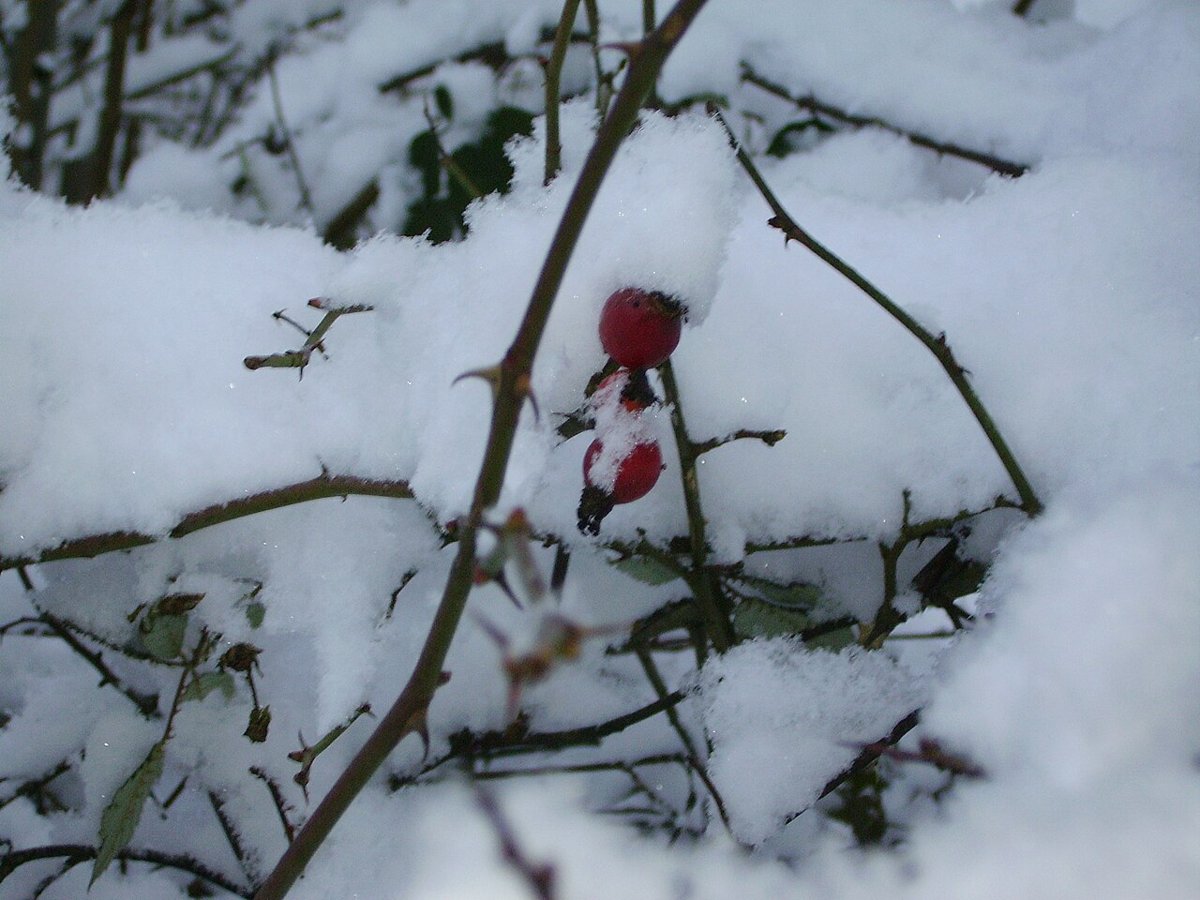
Rose hips often hang on into winter – but after frost they taste blander. Photo: Nelson25, public domain.

How to prepare rose hips
Getting ready: Wash them, then cut off the stalk and the dark tip with the dried flower remains.
Purée or jam: Simmer the hips in a little water until soft, then press them through a fine sieve or a food mill. The nutlets and hairs stay behind. If you want to catch every last hair, strain the purée again through a fine cloth. Cooked with sugar, this becomes rose hip jam – in Franconia, in southern Germany, a traditional filling for doughnuts.
Raw: Halve the hips and scrape out the nutlets and hairs thoroughly; the flesh can then be eaten raw. It tastes sweet and sour.
Tea: Halve, deseed and dry the shells somewhere airy. By the way: pure rose hip tea is quite pale. The bright red "rose hip" tea blends from the supermarket usually get their colour from hibiscus.
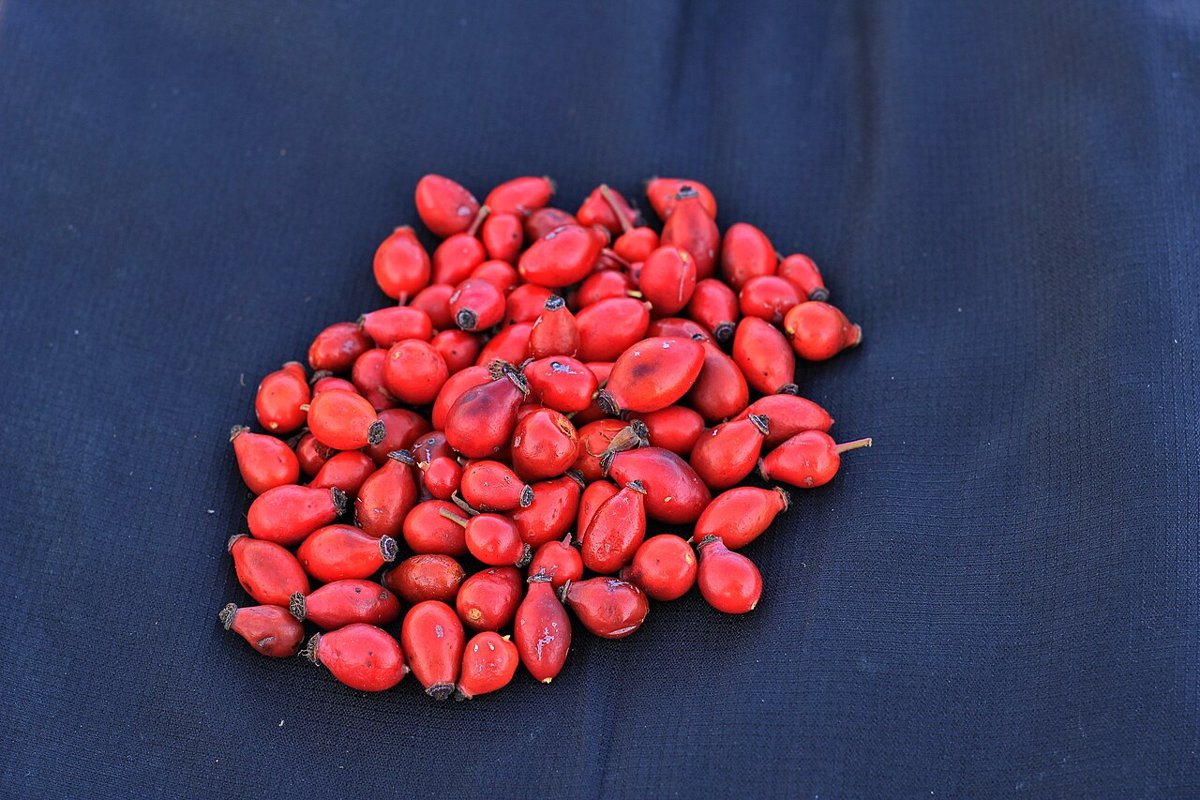
Freshly picked – now for the deseeding. Photo: Kirospe, CC0.

The flesh is rich in vitamin C. Exactly how much varies widely – by variety, location, ripeness and preparation.
The rules for foraging
In Germany, Section 39(3) of the Federal Nature Conservation Act allows anyone to gather wild fruit in small amounts for personal use, with care, in places they are allowed to enter. For rose hips, that means:
- Not in gardens or on private land. Many hedgerows border pastures and fields – and those belong to someone.
- Protected areas: Nature reserves can have their own bans. Watch for signs.
- Keep away from busy roads: Plants along heavy traffic can carry pollutants from exhaust fumes and tyre wear.
- Leave plenty behind. In winter, rose hips feed many of the birds that stay here all year.
Outside Germany, other rules apply – check what is allowed where you are.
Quick checklist
- Shrub with hooked prickles, pinnate leaves and red, elongated fruit? → Wild rose.
- Hips deep red and slightly soft? → Ripe.
- Best picked before the first frost.
- Always remove nutlets and hairs – gloves help.
- Small amounts only, only where you may enter, and leave enough for the birds.
Find rose hips near you
The Fruit Pin map shows freely accessible spots – fruit trees, nuts, berries and herbs. You will find rose hips under Berries. Use the In season filter to see what may be ripe near you right now.
A map entry does not replace identifying the plant on the spot: always look at the shrub, leaves and fruit yourself.
Know a wild rose hedge along a public path? Add it as a new spot so others can find it too. And if you are after more autumn fruit: sloes often grow right next door.
Before you pick
Identify every plant yourself with certainty before you eat it. Entries on this map come from users and are not verified by us. When in doubt, do not consume.